Where Do Horses Originate From? Not Europe, Not Asia

By: Nico Avelle  | 
The earliest form of horses didn't look quite this elegant or powerful. John Boland / Shutterstock

Where do horses originate from? We don't mean to sound corny, but the answer really does take us on a journey through millions of years of evolution, migration, and domestication.

Horses have roamed the planet far longer than they’ve pulled carts or carried riders, and their story begins in an unexpected place: North America.

Advertisement
Ancient Origins in North America

Hyracotherium
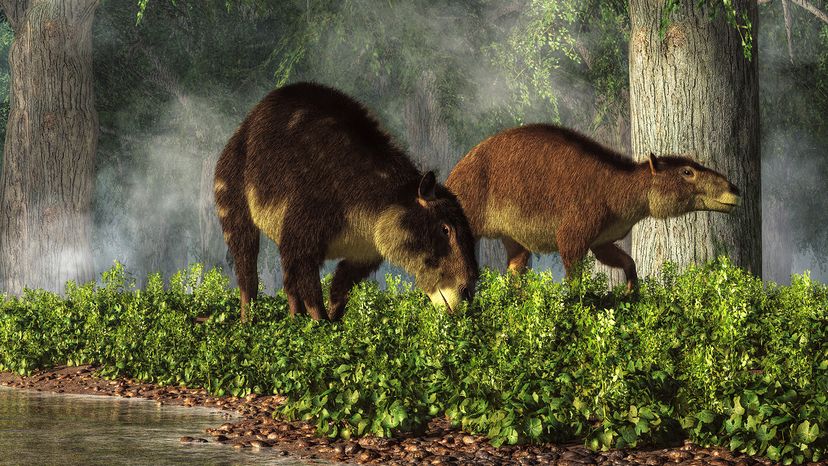
These ancient horses predated the zebras and North American horses we're more familiar with today. Daniel Eskridge / Shutterstock

Horses originated in North America over 55 million years ago, evolving from a small animal known as the dawn horse (Hyracotherium).

This ancient species had four toes on each front foot and three on each hind foot, and browsed on leaves rather than grazing on grass. Fossilized horse remains found across the continent provide extensive evidence of horse evolution through time.

Advertisement

Over millions of years, the genus Equus emerged—the group that includes modern horses, zebras, and donkeys. These horse ancestors gradually developed longer legs and hard hooves in place of toes—adaptations that enabled greater speed to escape predators on open grasslands.

Disappearance and Return

Despite originating in North America, horses disappeared from the continent around 10,000 years ago during the last Ice Age, possibly due to climate change or overhunting by early humans.

They later reappeared in the New World when the Spanish brought domesticated horses to the Americas in the 15th and 16th centuries.

Advertisement

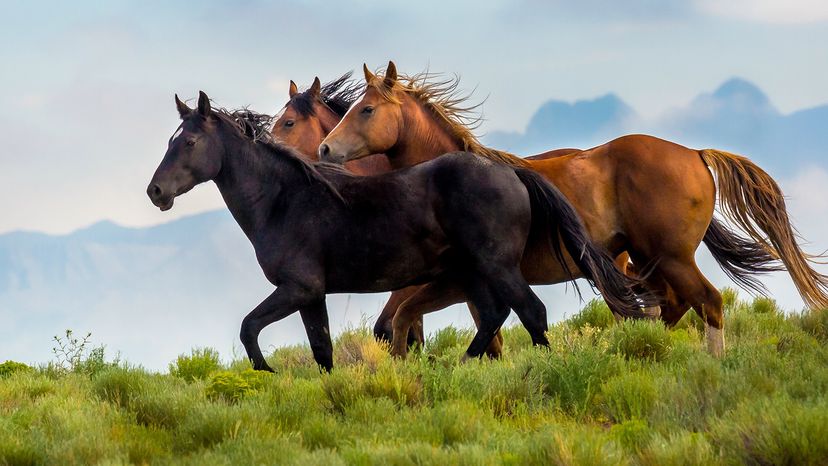
This return marked the beginning of wild populations of horses, like the mustangs in North America, which are descended from these reintroduced domestic horses and are now considered invasive in some regions.

Migration Through the Bering Land Bridge

horse
Not many other animals are as closely entwined with human evolution as horses are. Dr. Gilad Fiskus / Shutterstock

Before their extinction in North America, horses migrated to other continents via the Bering Land Bridge, connecting what is now Alaska and Siberia. From there, they spread through Asia, Europe, and North Africa, adapting to new environments over extended periods.

Horse remains found in regions like the Middle East, northern Caucasus, and Central Asia have helped researchers trace the spread of equine species.

Advertisement

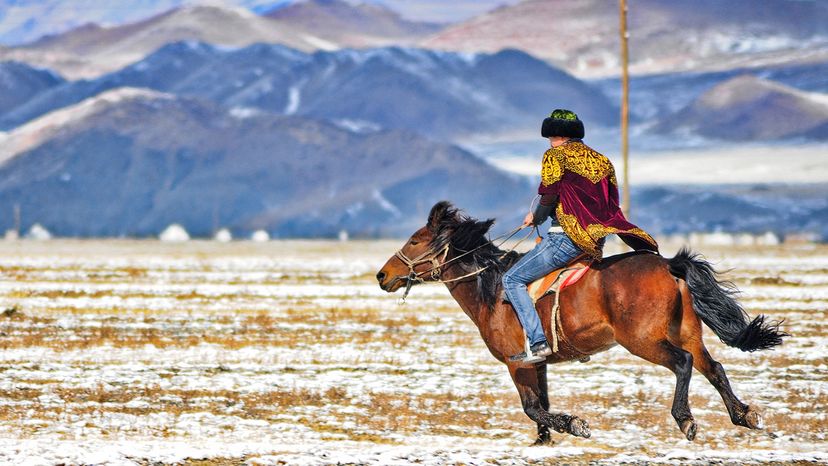
Mitochondrial DNA and archaeological evidence point to Central Asia as a likely site where horses started being domesticated around 5,500 years ago.

Domestication and Cultural Impact

The first domesticated horses likely came from the Eurasian steppe, where humans began using horses for transportation, agriculture, and warfare. This led to the rise of the modern domestic horse, which quickly became an integral part of many civilizations.

Cave paintings, horse bones, and leg bones found near early settlements show that horses were once prey animals before becoming tools for mobility and labor.

Advertisement

Over time, the horse evolved from a hunted animal into a companion, shaping migration patterns, trade, and warfare.

The Modern Horse

Today’s modern domesticated horses are direct descendants of those ancient equines that once roamed the Great Plains and Eurasia. While wild horses still exist in some areas, most horses today are bred and raised by humans across all continents except Antarctica.

Thanks to their speed, strength, and adaptability, horses have become one of the most important domesticated animals in human history—right alongside dogs and cattle.

Advertisement

We created this article in conjunction with AI technology, then made sure it was fact-checked and edited by a HowStuffWorks editor.

Advertisement

Loading...