The White Whale Whistles and Clicks—Not Your Typical Whale Song

By: Nico Avelle  | 
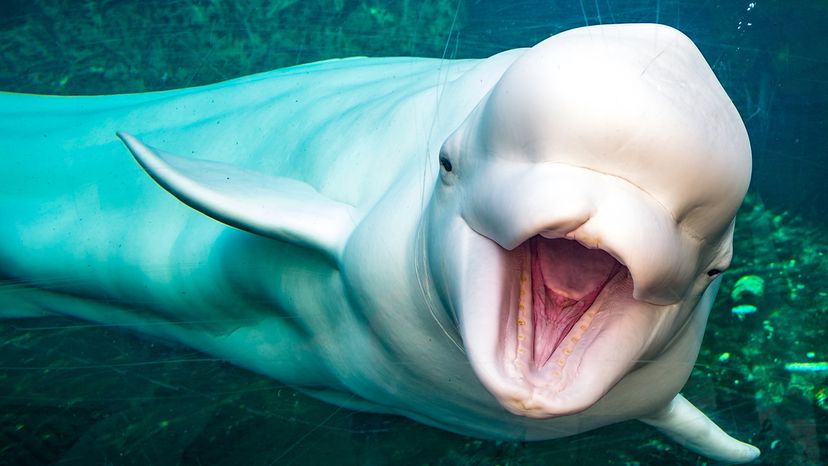
The beluga is also the only whale that can turn its head with a flexible neck. CJ Larsen / Shutterstock

The beluga, also known as the white whale, is a small Arctic cetacean famous for its bright color and unusual voice. Beluga whales live across the Arctic Ocean and nearby subarctic waters, where sea ice and cold temperatures shape their environment.

Unlike many cetaceans, adult belugas turn completely white as they mature. This color helps them blend into pack ice and snowy Arctic waters while avoiding natural predators like killer whales and polar bears.

Advertisement

Belugas have fascinated people for centuries. Their wide range of vocal sounds earned them the nickname "sea canary."Scientists still study these toothed whales to understand how they survive in harsh polar seas.

Belugas: The Arctic's Famous White Whale

The beluga is one of the most recognizable species of toothed whales. Unlike most cetaceans, it lacks a dorsal fin. Instead, it has a flexible dorsal ridge that helps the whale move under sea ice without injury.

Another unusual feature is that its neck vertebrae are not fused, which differs from other whales. The flexible neck vertebrae allow the animal to turn its head side to side—something many cetaceans cannot do.

Advertisement

Belugas are relatively slow swimmers compared with other toothed whales. They often travel in mixed groups or pods across coastal areas, estuaries and open waters from Alaska to the eastern Canadian Arctic.

Life in Arctic Waters

Belugas feed on fish and other marine prey found along the continental shelf. Arctic cod is a major food source, but belugas also eat salmon, squid, and octopus.

These whales dive repeatedly through icy waters to hunt. They often gather near breathing holes in sea ice during winter when much of the Arctic Ocean freezes.

Advertisement

Because they spend time near coasts and estuaries, belugas sometimes enter large river systems such as the St. Lawrence River. These seasonal movements help them find food and safe places to raise calves.

Social Behavior and Communication

Belugas are among the most vocal of all cetaceans. Their whistles, clicks, and chirps help individuals maintain contact while swimming in murky Arctic waters.

This constant chatter led researchers to nickname them the "canaries of the sea." Scientists writing in publications such as Scientific American have documented dozens of vocal sounds used by belugas.

Advertisement

Pods often include adult males, females, and calves. These groups cooperate while feeding, migrating, and avoiding predators such as orcas.

Reproduction and Growth

Mating occurs in late winter or early spring when beluga populations gather in certain coastal areas. Females usually give birth to a single calf after a long gestation period (about 15 months).

Newborn calves appear dark grey rather than white. Over several years the color gradually fades until adult belugas become bright white.

Advertisement

Belugas reach sexual maturity after several years and can live for decades in the wild. Their social structure allows mothers and calves to stay within pods that help protect younger animals.

The White Whale in Culture and Science

The idea of a mysterious white whale has long captured human imagination. In literature, Captain Ahab obsessively pursued the white sperm whale in "Moby Dick," turning the animal into a symbol of obsession.

In the real world, the beluga remains one of the most studied Arctic whales. Researchers track global population trends in places such as Cook Inlet in Alaska and the Bering Sea to understand how climate change affects Arctic species.

Advertisement

As sea ice declines and Arctic ecosystems shift, scientists continue monitoring beluga populations across the Arctic Ocean. Studying this remarkable white whale helps researchers understand how marine mammals survive in one of the most extreme environments on Earth.

We created this article in conjunction with AI technology, then made sure it was fact-checked and edited by a HowStuffWorks editor.

Advertisement

Advertisement

Loading...