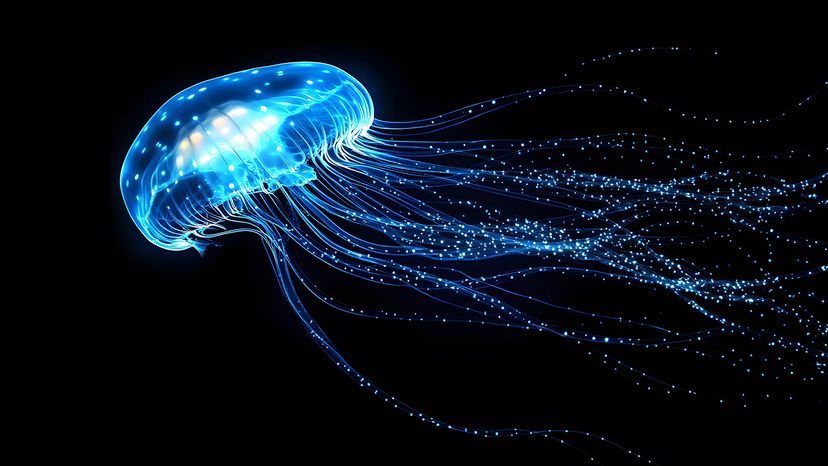
How Bioluminescent Jellyfish Get Their Signature Glow

By: Nico Avelle  | 
Why do certain jellyfish produce bioluminescence? Pichet Manoratana / Shutterstock

In the deep ocean where sunlight fades to black, a strange glow pulses through the water.

That glow comes from bioluminescent jellyfish, creatures that produce their own light using a chemical reaction. This glow is self-made, thanks to specialized cells and proteins in their bodies.

Advertisement

Bioluminescence is common among marine animals, from squid to sea cucumbers to single-celled organisms called dinoflagellates. But glowing jellyfish—especially comb jellies and deep-sea jellies—have perfected the art of underwater light.
How Jellyfish Produce Light

jellyfish
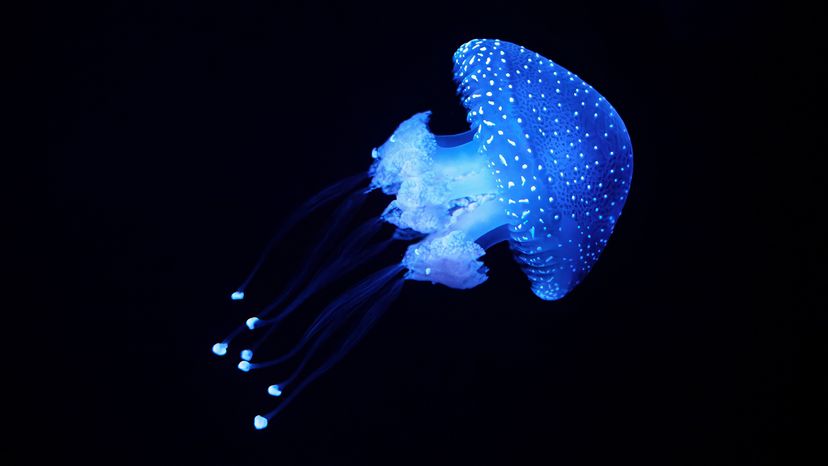
Bioluminescent jellyfish emit a green or blue light in dark oceanic depths. Dmitry Rukhlenko / Shutterstock

These jellyfish use a chemical called luciferin, which reacts with oxygen to produce light. The energy from that reaction releases photons, creating a visible glow.

Many species also rely on a protein called luciferase to control the reaction, and some use light organs to focus or amplify the shine.

Advertisement

The color of the glow depends on the species. Most produce blue or blue-green bioluminescence because these wavelengths travel farthest in seawater. Others, like some comb jellies, can emit flashes of green light.

Why Glow in the Dark?

Jellyfish don’t shine for fun. Bioluminescence serves a purpose.

In the dark ocean, light can attract prey, confuse predators, or even attract females in some species. Some use glowing lures to bait deep-sea fish, while others create waves of light to startle threats or hide their escape.

Advertisement

The Portuguese man o' war, which isn’t a true jellyfish but often grouped with them, has long tentacles used to capture prey and warn off predators.

Different Types of Glowing Jellies

jellyfish
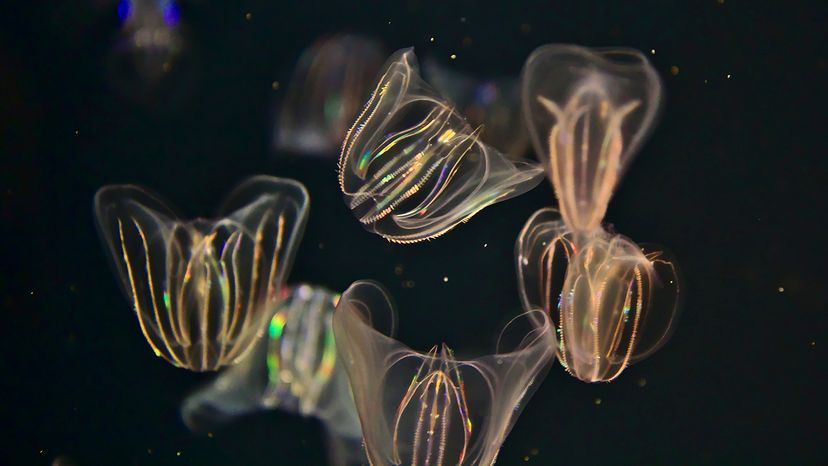
Comb jellyfish shine, but not with true bioluminescence. Karen Adamczewski / Shutterstock

Not all glowing jellyfish are the same. Comb jellies, also called ctenophores, use rows of cilia that diffract light, creating a rainbow effect that’s often mistaken for true bioluminescence.

Others, like certain deep-sea jellies, have actual light-producing organs and use them for hunting or defense.

Advertisement

These creatures live far from daylight, often thousands of feet below the surface. In these zones, known as the bathypelagic and abyssopelagic, sunlight doesn’t reach—but jellyfish still shine. The result is a surreal world lit not by the sun, but by the animals themselves.

We created this article in conjunction with AI technology, then made sure it was fact-checked and edited by a HowStuffWorks editor.

Advertisement

Advertisement

Loading...