The Blue Dragon Sea Slug Eats Venomous Prey and Saves the Stingers for Later

By: Nico Avelle  | 
It's hard to tell whether Pokemon is inspiring nature at this point. S.Rohrlach / Getty Images

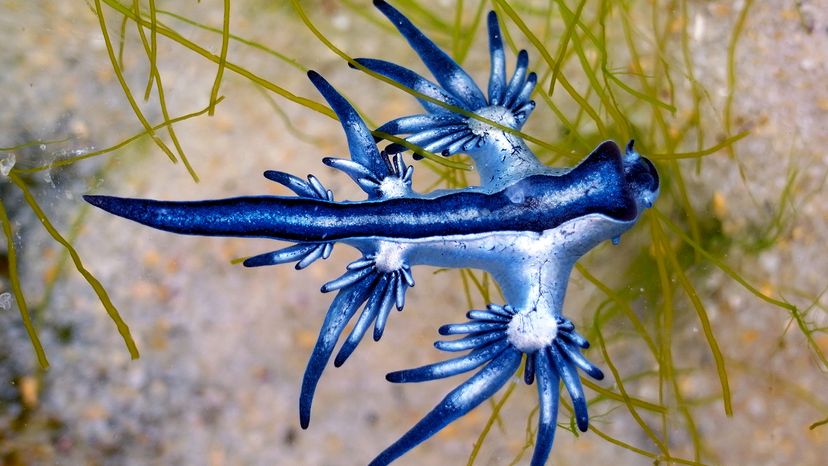
The blue dragon sea slug looks like a tiny ocean creature from a fantasy illustration. Despite its delicate appearance this small animal is a fierce predator that floats across the open ocean and feeds on some of the sea's most venomous animals.

Known scientifically as Glaucus atlanticus, the blue dragon is a species of sea slug in the family Glaucidae. These tiny pelagic creatures drift along the ocean's surface in temperate and tropical waters of the Atlantic, Pacific, and Indian Oceans.

Advertisement
What Is the Blue Dragon Sea Slug?

The blue dragon—also called the blue sea dragon or blue angel—is a brightly colored nudibranch that spends its life floating in the open ocean. Adults usually grow to about 1.2 in (3 cm) long.

Unlike most nudibranchs that crawl along the seafloor, this species lives at the ocean's surface as part of the "neuston": organisms that inhabit the thin boundary between sea and air. A small gas bubble in the animal's stomach allows it to stay afloat and drift with ocean currents and winds.

Advertisement

Glaucus atlanticus floats upside down at the water's surface. Its blue side faces upward while a silvery gray side faces downward. This countershading acts as camouflage, helping it blend into both the blue ocean above and the bright water surface below.

Where Blue Dragons Live

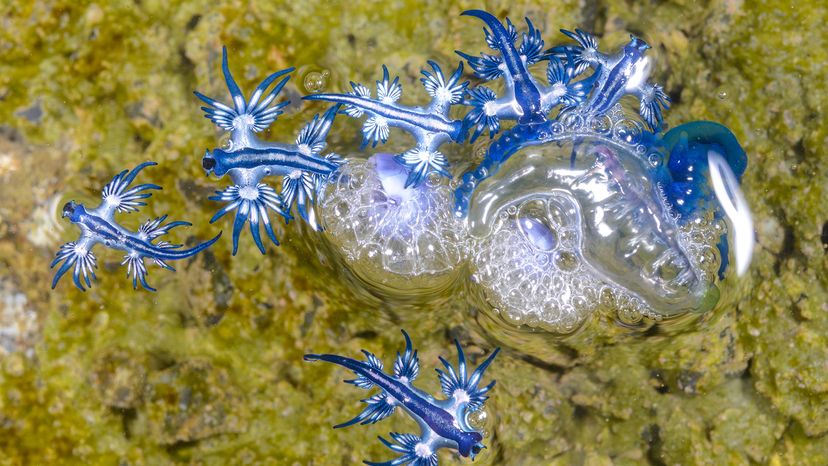
Blue dragon sea slugs are commonly found in temperate and tropical waters across the Atlantic, Pacific, and Indian Oceans. They often gather in floating groups sometimes called a "blue fleet."

These tiny sea slugs drift wherever ocean currents carry them. They are frequently seen near floating objects and among other surface creatures such as the Portuguese man o' war, the by-the-wind sailor and the violet snail.

Advertisement

Climate change and shifting ocean currents appear to be affecting their distribution. In recent years researchers have recorded the species moving northward by about 93 miles (150 km) in the Gulf of California.

Strong winds and ocean currents can also lead to sightings along unexpected coastlines including parts of the U.S. Gulf Coast.

Advertisement

Feeding on Venomous Prey

nature
Those "bubbles" are actually a Portuguese man o' war, which has venomous sting, but it's no match for these blue dragons. Nobuhiko Kimoto / Getty Images/iStockphoto

Despite their tiny size blue dragons are predators that drift at the ocean's surface. Their diet includes venomous siphonophores such as the Portuguese man o' war along with other pelagic creatures drifting on the ocean's surface.

The slug uses serrated teeth to bite off pieces of its prey. Even more remarkable, it stores the prey's stinging cells (called nematocysts) inside its own tissues.

Advertisement

This strategy turns the predator's weapons into the slug's defense system. Because the blue dragon concentrates these stinging cells, its sting can produce symptoms similar to those caused by a Portuguese man o' war.

If food becomes scarce these predators have even been observed eating other blue sea slugs of the same species.

Advertisement

Why Blue Dragons Can Be Dangerous

hand
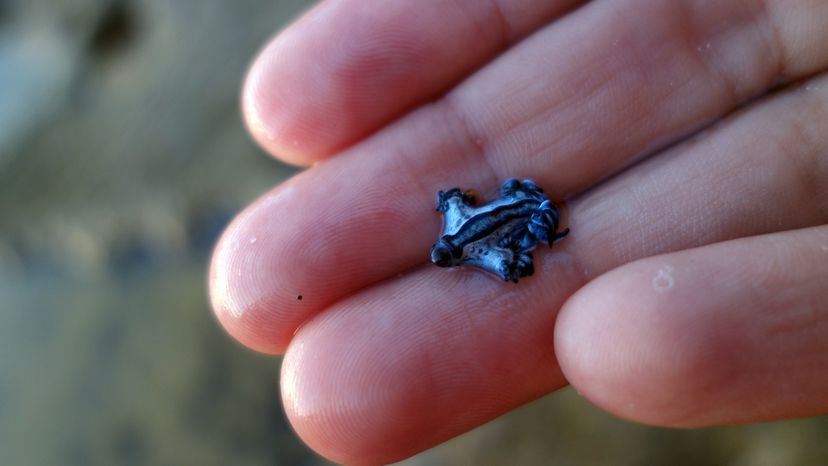
Even though these ferocious creatures are incredibly small, it's a bad idea to touch them with your bare skin. S.Rohrlach / Getty Images/iStockphoto

Handling a blue dragon sea slug can result in a painful sting. The venom they store from siphonophores remains active even if the animal has died.

The sting can produce symptoms similar to those caused by a Portuguese man o' war including intense pain. Beachcombers are often warned not to touch the tiny animals when they wash ashore.

Advertisement

Because their bright colors make them easy to spot along the coast, curious visitors sometimes try to pick them up. Scientists recommend avoiding contact with any unknown marine animals found floating on the beach.

Reproduction and Life Cycle

Blue dragon sea slugs are hermaphrodites, meaning each individual has both male and female reproductive organs. However they still require a partner to produce fertilized eggs.

When pair mates reproduce they align their ventral sides together. After mating both animals can lay eggs.

Advertisement

A single blue dragon can release egg strings containing about 20 eggs each and has been observed producing dozens of egg strings per hour. The eggs hatch into larvae after roughly three days and begin life drifting in the open ocean.

Conservation and Scientific Interest

The conservation status of Glaucus atlanticus remains uncertain. Because these sea slugs live in open water it is difficult for scientists to measure their population accurately.

Researchers continue to study the species in fields such as invertebrate systematics and marine ecology. Scientists are also interested in surface-dwelling ecosystems like the neuston because they reveal how life adapts to extreme ocean environments.

Advertisement

Pollution, habitat degradation and climate change may influence where blue dragons appear in the future. Ocean currents and strong winds can shift where these tiny predators show up across the world.

We created this article in conjunction with AI technology, then made sure it was fact-checked and edited by a HowStuffWorks editor.

Advertisement

Advertisement

Loading...