Blue Jellyfish Have Specialized Tissues in Place of Eyes, Brains, and More

By: Nico Avelle  | 
Blue jellyfish
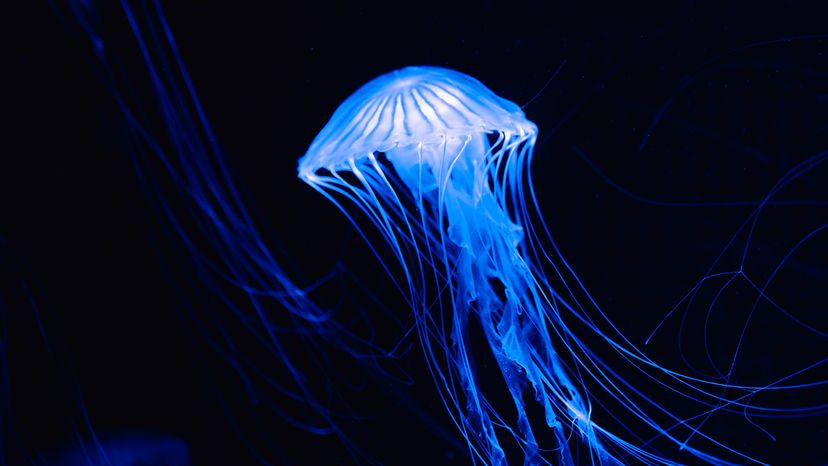
Blue Jellyfish get up to 12 in (30 cm) in diameter. Olena Malik / Getty Images

If you spot a splash of electric blue drifting along the shoreline, it's probably not a plastic bag. That pulsing blob is likely either a Portuguese man-of-war or a blue jellyfish, one of the most striking marine invertebrates you can find floating near beaches in the Northern Hemisphere (primarily in the North Atlantic region).

Despite their vibrant appearance, blue jellyfish are not actually fish. But like other jellyfish species, they're plankton — drifting creatures at the mercy of the ocean.

Advertisement

These animals move with the current, unable to swim against it, and rely on the wind and waves to determine where they end up. They're part of a fragile yet ancient marine ecosystem.
Meet the Blue Jellyfish

A blue jellyfish (Cyanea lamarckii) is typically light blue or violet with a transparent bell that can grow up to 12 in (30 cm) in diameter. "Bluefire jellyfish" is simply another name for this animal not a different species.

The bell is the dome-shaped main body. From beneath, stinging tentacles trail behind, accompanied by mouth arms that help guide food to a central mouth.

Advertisement

Their appearance may resemble by the wind sailors or blue buttons — both colonial creatures that also float using gas filled tubes or sails.

Blue jellyfish are commonly found in the Northern Hemisphere, especially during the summer months when they drift near the surface. These organisms are made up largely of water, and their structure makes them excellent drifters, sometimes covering vast distances with the ocean currents.

Advertisement

Anatomy and Function

The bell functions like a pump, allowing the jellyfish to move vertically. The stinging tentacles — packed with venom — help the jellyfish capture prey such as small fish, small crustaceans, worms, and plankton.

The mouth arms transfer food to the mouth, where digestive enzymes handle, well, digestion. The food travels through a central cavity and is absorbed by the body tissues.

Advertisement

Blue jellyfish lack bones, eyes, or even a proper brain. Instead, a nerve net responds to touch and light, helping them navigate.

Their body consists of specialized tissues that perform tasks like feeding, digestion, and reproduction. Their soft skin and gelatinous structure help them float effortlessly.

Advertisement

Reproduction and Development

blue jellyfish
You won't typically find blue jellyfish in the Southern Hemisphere. Ruben Earth / Getty Images

Reproduction begins with eggs, often fertilized in the water. These develop into larvae that settle and grow into polyps. From these polyps, young jellyfish bud off — colorless and nearly invisible at first.

As they grow, they develop their signature blue color, which serves as camouflage in open water.

Advertisement

This transformation happens in the spring and early summer. By July, full blooms are common. In autumn, winds often wash jellyfish ashore.

These seasonal changes are part of a natural cycle influenced by light, temperature, and food availability. Blooms may be driven by increased availability of prey like plankton, eggs, and tiny fish.

Advertisement

Eating and Being Eaten

Blue jellyfish are opportunistic feeders. Their diet includes plankton, fish eggs, small fish, small crustaceans, worms, and even other jellyfish. They rely on stinging tentacles to immobilize prey before transferring it to their mouth arms. From there, food is digested by polyps inside the bell.

They are also part of the diet of many marine animals. Birds, fish, and even other jellyfish eat them. In some cases, small fish use the jellyfish's tentacles for protection, swimming within them to avoid predators. These interactions highlight the jellyfish's dual role as predator and shelter.

Advertisement

Encounters With Humans

During summer, blue jellyfish often wash ashore in large numbers, especially after strong winds. Beachgoers may step on them accidentally.

Although their sting is not deadly, it can cause skin irritation, swelling, and redness. Stings can cause discomfort and pain but usually resolve without serious complications. The best approach is to rinse the sting with seawater and not rub the affected area.

Advertisement

If symptoms worsen or if the sting covers a large area, medical attention may be necessary. Sensitive individuals should avoid touching jellyfish altogether. Even when they appear lifeless, their tentacles may still sting.

Misidentified and Misunderstood

Blue jellyfish
Blue jellyfish are kind of like nature's lava lamps. Westend61 / Getty Images/Westend61

Blue jellyfish are often mistaken for by the wind sailors or blue buttons — both also appear on beaches and share the same blue hue. These creatures form colonies, not single organisms. Unlike jellyfish, they float using sails or gas chambers.

Some of these lookalikes are harmless, while others can sting. Knowing the difference can prevent unpleasant surprises while walking along the shore. Carefully observing the tentacles, bell shape, and method of movement can help distinguish species.

Advertisement

Drift, Float, and Survival

Drifting with ocean currents, blue jellyfish have no control over their horizontal movement. They're carried by the sea, wind plays a crucial role in their direction and eventual beaching. Some years see enormous blooms of jellyfish, covering beaches in layers. Other years, few are spotted.

Their survival depends on this drift, the abundance of food, and favorable conditions. Blue jellyfish float near the surface, where sunlight powers the food chain. When conditions are right, they bloom rapidly and disappear just as fast.

Advertisement

This cycle is affected by climate, predator-prey interactions, and the jellyfish’s ability to respond to their environment.

11 Fun Facts About Blue Jellyfish

  1. Their tentacles can stretch to impressive lengths, allowing them to cover wide areas while feeding.
  2. Blue jellyfish sting to paralyze prey — not to attack humans.
  3. They’re part of the same group as sea anemones and corals.
  4. In some ecosystems, birds and fish rely on jellyfish as a food source.
  5. Their colour helps them hide from predators above and below.
  6. Their body is more than 95 percent water and lacks bones or a skeleton.
  7. Blue jellyfish don’t walk, think, or see — but they thrive nonetheless.
  8. Some years bring large blooms to beaches in the UK and Europe.
  9. Though not edible to humans, they are vital food for other animals.
  10. Their appearance varies based on age, food, and environmental factors.
  11. They are invertebrates with a soft, pulsing form that can easily be damaged.

We created this article in conjunction with AI technology, then made sure it was fact-checked and edited by a HowStuffWorks editor.

Advertisement

Advertisement

Loading...