Colossal Squid vs. Giant Squid: There's a Massive Difference

By: Nico Avelle  | 
Giant squid
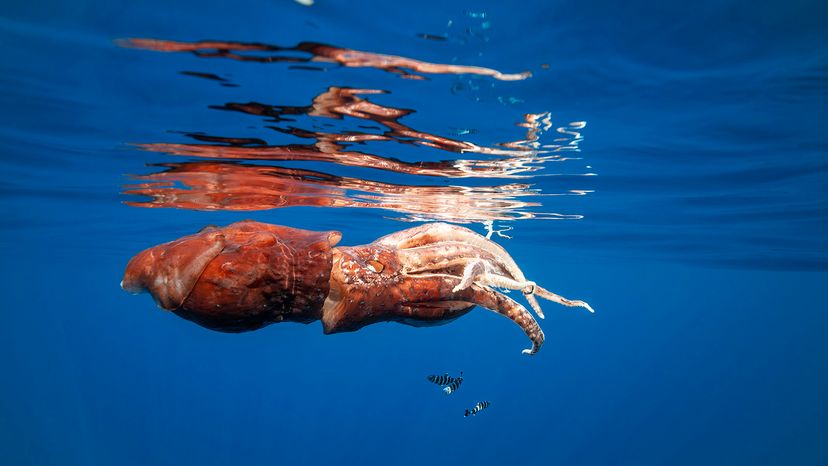
Giant squid are several times larger than humans ... and colossal squid are about twice as big as giant squid. by wildestanimal / Getty Images

When you think of a showdown between deep-ocean giants, what comes to mind is probably the colossal squid vs. giant squid.

These two legendary cephalopods are among the largest living invertebrates, but they aren’t interchangeable. Each has its own size record, hunting style, natural habitat, and key differences.

Advertisement

Which Is Bigger, the Colossal Squid or Giant Squid?

The giant squid (Architeuthis dux) holds the record for total length, with some female giant squid measuring up to 43 feet (13 m) from the fins to the tip of their incredibly long tentacles and weighing up to 606 lb (275 kg).

The colossal squid (Mesonychoteuthis hamiltoni) is shorter overall at around 33 feet (10 m) but far heavier, with the largest colossal squid specimen weighing about 1,100 lb (500 kg). That makes the adult colossal squid the heaviest squid species.

Advertisement

Both are among the largest living invertebrates, with colossal squid having the largest beak, the largest eyes, and large eggs compared to other squid species.

Where Giant and Colossal Squid Live

Giant squid inhabit the open ocean, sometimes drifting into shallower waters, while colossal squid live mainly in the Southern Ocean near Antarctica. This deep sea habitat has low dissolved oxygen, cold water temperatures, and limited light.

Colossal squid spend much of their time near the ocean floor, while giant squid move vertically through their natural environment to catch prey. Other squid species, like the glass squid and newly discovered deep sea squid, thrive in separate parts of the ocean.

Advertisement

Hunting and Defense

Both giant and colossal squid have eight arms and two tentacles, but their tools differ.

Colossal squid arms have two rows of tiny suckers and rotating hooks made of material similar to human fingernails, perfect for gripping large fish, other squid, and other cephalopods. Light organs on the colossal squid may help camouflage it from large predators.

Advertisement

Giant squid use powerful suction alone.

Sperm whales, smaller whales, and other large predators feed primarily on giant and colossal squid, as evidenced by the presence of their indigestible beaks in whale stomachs.

Advertisement

Notable Specimens and Observations

Dead specimens are rare. Plus, Female giant squid, young squid, and colossal squid specimens are seldom found intact.

Researchers have even resorted to examining stomach contents of predators to identify colossal and giant squid remains. The Museum of New Zealand Te Papa Tongarewa (Te Papa) preserves one of the largest colossal squid specimens ever recovered.

Advertisement

The Schmidt Ocean Institute has filmed deep sea squid in their natural habitat, providing rare footage of these and other cephalopods.

Relatives and Other Squid Species

Beyond giant and colossal squid, the animal kingdom includes many species of other squid. They lay relatively large eggs, use two fins for movement, and have evolved to catch prey efficiently.

Studying their conservation status, total length, natural history, and adaptations—such as light organs, two tentacles, and suckers—offers insight into the diversity of cephalopods and their place in ocean ecosystems.

Advertisement

We created this article in conjunction with AI technology, then made sure it was fact-checked and edited by a HowStuffWorks editor.

Advertisement

Loading...