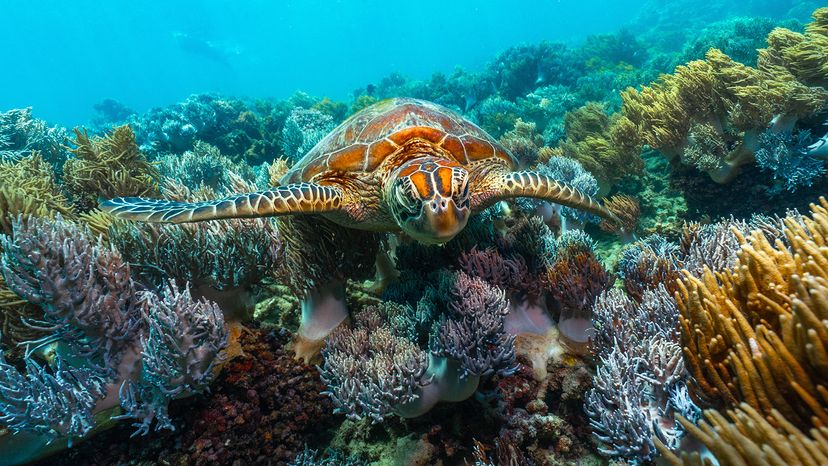
All of these coral reef locations tell the same basic story: Borals are animals, not plants, and each colony is made of polyps with a mouth ringed by tentacles and stinging cells. Those polyps partner with symbiotic algae, build calcium carbonate skeletons, and create structure for entire marine ecosystems.
That structure supports essential breeding, spawning, and feeding grounds for marine life. It also underpins ecosystem services provided to people: food for millions, coral reef tourism worth about $36 billion a year, shoreline protection worth billions, and an estimated 1 billion people who benefit either directly or indirectly from reefs.
Yet reef health is falling under pressure from global threats and local damage. NOAA, the UN Environment Programme and NOAA Fisheries all point to the same pattern: Coral bleaching is becoming more frequent as ocean warming intensifies, ocean acidification makes it harder for corals to maintain their skeletons, and damaged coral reefs need help from restoration efforts, marine protected areas, better wastewater control, and sustainable management.
The fourth global bleaching event began in 2023, following major global bleaching years in 1998, 2010 and 2014 to 2017. Add overfishing, plastic pollution, disease, invasive species, greenhouse gas emissions, and poorly planned coastal development, and the result is simple: When corals die, reef condition drops, coral cover shrinks, and the benefits reefs provide to local communities start to erode too.
Some of the most promising responses are already underway. Coral farming, nursery work, marine protected areas, citizen science, education programs, and smarter tourism rules can all support coral growth and reef recovery—but none of them replaces the need to cut emissions and limit ocean acidification driven by climate change.
We created this article in conjunction with AI technology, then made sure it was fact-checked and edited by a HowStuffWorks editor.