How Do Jellyfish Eat Without Teeth?

By: Nico Avelle  | 
Jellyfish
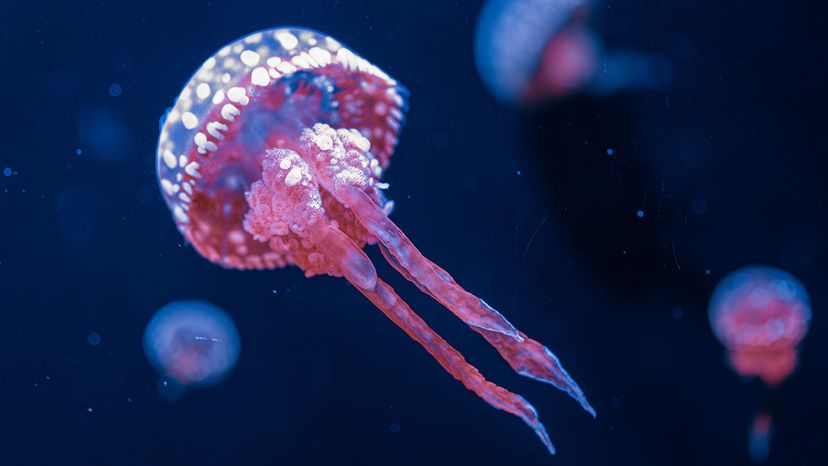
Stinging cells are a key part of the jellyfish's hunting strategy. Minakryn Ruslan / Shutterstock

They have no brains, no bones, and no backstories. Yet somehow, jellyfish are among the ocean's most successful survivors. So, how do jellyfish eat? The answer is all about stings, tentacles, and some very sneaky arms.

There are thousands of jellyfish species drifting through Earth's waters, from the glowing sea nettles of California to the upside down jellyfish resting on Caribbean seafloors.

Advertisement

And despite their name, not all "jellies" are true jellyfish. Comb jellies, for example, look similar but don’t sting. Sea anemones and stalked jellyfish share some features too, but differ in behavior and structure.
How Do Jellyfish Eat?

Most jellyfish capture prey using stinging tentacles loaded with cells called cnidocytes. These specialized cells fire tiny harpoons that inject venom into small animals like copepods, plankton, and fish larvae.

Once stunned, the prey gets moved by oral arms toward the mouth—often located at the center of their bell.

Advertisement

Many jellyfish, such as the scyphozoan jellyfish, have four oral arms surrounding a single entry point. This mouth also serves as the exit, meaning jellyfish have a single opening for both food intake and waste expulsion.

The nerve net and small sensory structures help them detect light and motion, guiding them toward dense patches of prey in the water column.

Advertisement

What Do Jellies Eat?

Jellyfish tentacles
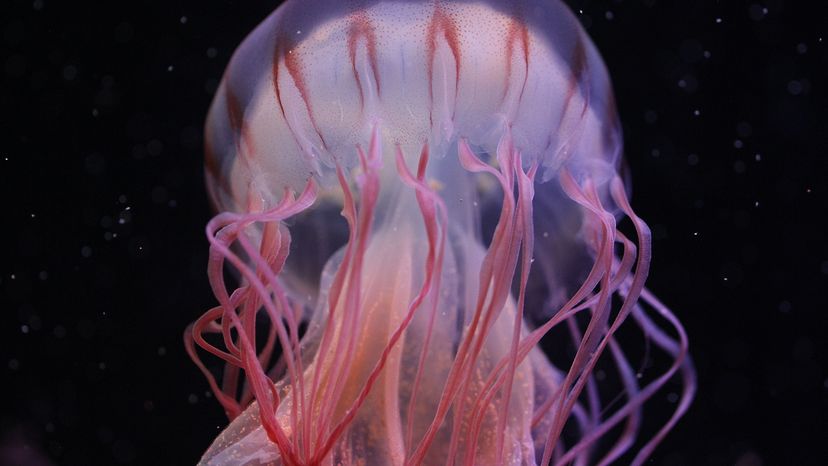
A jellyfish stings its prey before consuming it. Wirestock Creators / Shutterstock

What jellies eat depends on the species. Some prefer tiny creatures like krill, copepods, or even microscopic zooplankton. Others, like the lion's mane jellyfish—one of the largest species—can trap bigger fish or even other jellyfish with their long tentacles.

In short, jellyfish eat almost anything they can sting and swallow. That includes:

Advertisement

  • Fish larvae
  • Small fish
  • Crabs
  • Other jellyfish
  • Gelatinous zooplankton

A few species, such as the box jellyfish, can even pose a danger to humans. Their venom is potent enough to kill small marine animals—and in rare cases, people.

Advertisement

Feeding Strategies Across Species

The upside-down jellyfish flips the script by resting on its bell and using short tentacles to catch prey drifting above. Fried egg jellies, named for their yolk-like appearance, drift passively and trap tiny animals with their tentacles.

Some jellyfish live in symbiosis with algae that provide food via photosynthesis. These jellies survive in nutrient-poor environments by soaking up sunlight.

Advertisement

This shows just how adaptable many jellyfish species are when it comes to finding food.

The Jellyfish's Role in Ocean Ecosystems

Green Turtle eating a Red Jellyfish
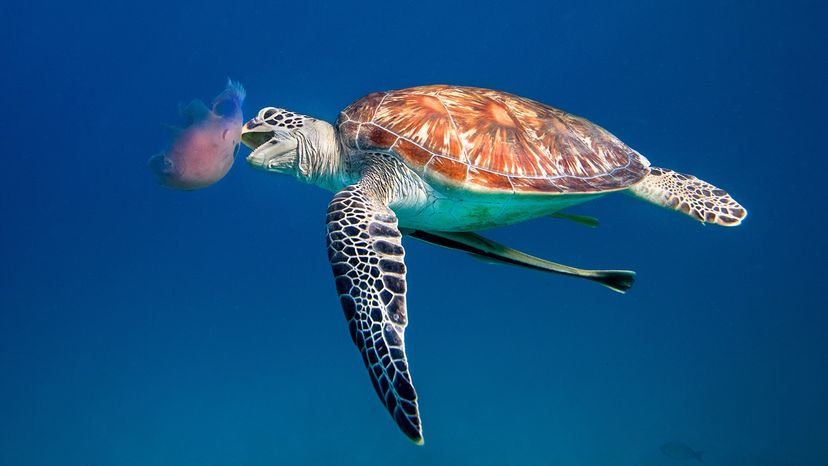
Sea turtles eat sea jellies. It's all part of the food chain. Ai Angel Gentel / Getty Images

Jellies are both predators and prey. They feed on zooplankton and other invertebrates, but they’re also on the menu for sea turtles, sharks, and bigger fish. In fact, sea turtles often mistake floating plastic bags for jellyfish—a major threat to their survival.

When jellyfish populations explode in events called jellyfish blooms, they can reshape entire marine ecosystems. Blooms reduce fish populations by competing for the same food and sometimes eating fish eggs and larvae.

Advertisement

Threats and Adaptations

Ocean acidification and climate change may be helping jellyfish thrive. Warmer waters can speed up their life cycle and help them outcompete other animals. Jellies often thrive in disrupted marine habitats where more sensitive animals struggle.

Most jellyfish begin life in a polyp stage before budding off into adult forms. Their radial symmetry, simple nerve net, and efficient feeding make them well suited for survival in a changing ocean. That includes deep sea environments with almost no light.

Advertisement

So next time you watch a video of jellyfish pulsing through the sea, remember: Beneath that soft, drifting body is a highly efficient predator, providing food for some animals and outcompeting others.

We created this article in conjunction with AI technology, then made sure it was fact-checked and edited by a HowStuffWorks editor.

Advertisement

Advertisement

Loading...