How Do Jellyfish Reproduce? Egg Laying vs. Self-cloning

By: Nico Avelle  | 
Jellyfish
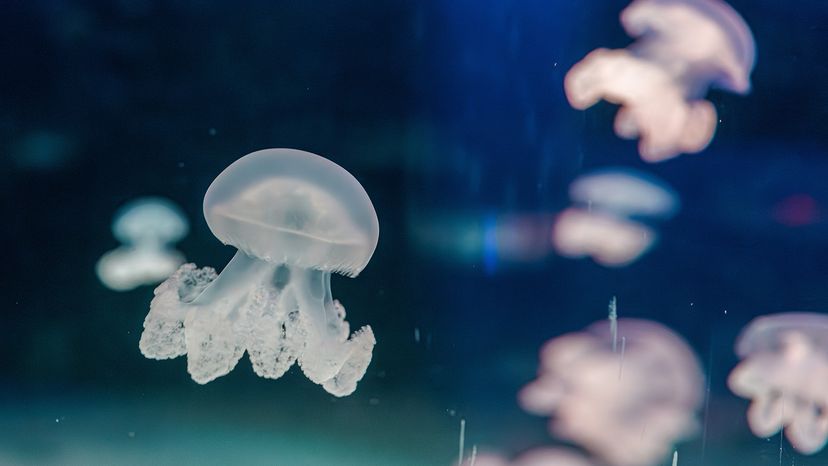
Some jellies carry their eggs in their oral arms until they hatch. Minakryn Ruslan / Shutterstock

How do jellyfish reproduce? That depends on which jellyfish you mean.

These gooey, brainless drifters don't all follow the same rules, but they do share one thing: a wildly complex life cycle that flips between forms and reproduction styles.

Advertisement

Most jellyfish species reproduce both sexually and asexually. That means some life stages involve fertilized eggs, while others rely on cloning themselves.

To understand how, you need to track a jelly through its wild ride from egg to adult.

Advertisement

From Egg to Medusa: The Jellyfish Life Cycle

In most jellyfish, reproduction begins when adult medusae (that’s the familiar bell-shaped jellyfish form) release eggs and sperm into the water. Fertilization usually happens externally.

Once fertilized, the egg becomes a larval stage called a planula. Think of it as a tiny, free-swimming speck that looks for a hard surface.

Advertisement

Once it lands, the planula transforms into a polyp form—a tiny, stalk-like creature that resembles sea anemones or corals. This jellyfish polyp stage doesn’t just sit there looking cute. It reproduces asexually by a process called strobilation, forming stacks of disk-like clones.

Eventually, each disk peels off and grows into a new medusa. This pulsing form swims freely, feeds on plankton and tiny animals, and develops stinging cells on its tentacles to capture prey.

Once mature, it’s ready to reproduce sexually, and the cycle continues.

Advertisement

Reproduction Strategies Across Different Species

Comb jellyfish
Despite the name, comb jellyfish aren't technically jellyfish. SunflowerMomma / Shutterstock

True jellyfish, part of the class Scyphozoa, generally follow the polyp-to-medusa cycle. But other jellies take a different route.

Comb jellies, for example, are gelatinous marine animals that aren't technically jellyfish. They don’t have stinging cells and often reproduce sexually as simultaneous hermaphrodites.

Advertisement

Box jellyfish, on the other hand, are infamous for their potent stings and more developed systems. Some species even have primitive eyes and brain-like structures. They still produce fertilized eggs and go through polyp and medusa stages but tend to be faster-growing and deadlier to humans.

Upside-down jellyfish have a unique twist. They rest on their bells and extend their oral arms upward to host algae, which provide food through photosynthesis. They can release eggs and sperm like other jellies, but their dependence on symbiotic algae changes how and when they reproduce.

Advertisement

Polyps: The Hidden Powerhouses

During the polyp stage, jellyfish play the long game. These polyps anchor to rocks, shells, or even other animals. When conditions improve, such as warmer temperatures or increased food availability, they rapidly form new medusae.

This leads to a jellyfish bloom, where many jellies emerge at once. One polyp can produce dozens of young jellyfish (medusae) at a time, especially when food and other conditions are favorable.

Advertisement

This is why jellyfish live in such high numbers in some coastal areas—and why they sometimes survive even when other marine life struggles.

Jellyfish, Humans, and the Ecosystem

When blooms get out of hand, they affect more than just swimmers. Large jellyfish can clog fishing nets, sting tourists, and disrupt marine food webs. Some species outcompete other animals by consuming vast amounts of plankton. Others become prey for sea turtles and certain fish.

In places where predators are gone and waters are warm, jellyfish thrive. Some species can even reproduce continuously. In the case of the rare immortal jellyfish, polyps can revert to the polyp stage, essentially avoiding death.

Advertisement

Jellyfish blooms can drastically alter marine food webs by shunting energy away from fish and toward bacteria, thereby affecting entire ecosystems. Their tentacles snag more than just prey—they can reshape entire habitats.

Watching Jellyfish Multiply

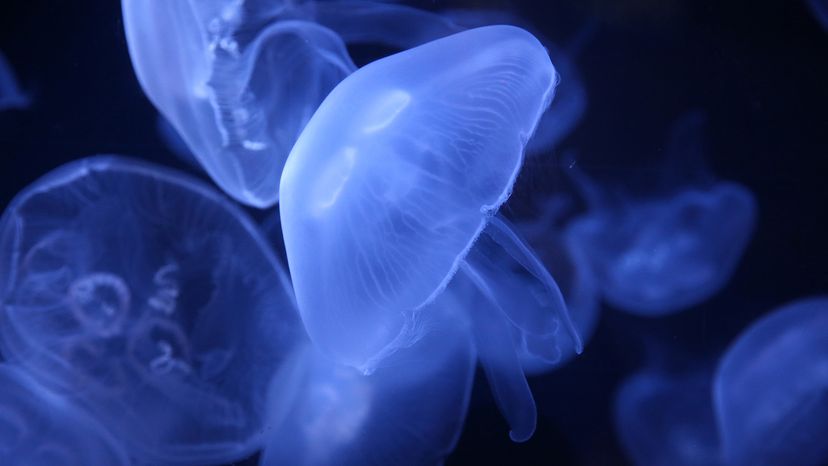
Moon jellyfish
Moon jellyfish feed on plankton. mikeledray / Shutterstock

If you’ve ever seen a video of jellyfish pulsing in an aquarium, you’ve probably watched reproduction in action. Some jellies carry their eggs in their oral arms until they hatch. Others broadcast sperm and eggs directly into the water, a strategy known as spawning.

Moon jellies, a common species in public aquariums, are textbook examples. They go through the full life cycle, from planula to adult, and can feed efficiently on small plankton using mucus-covered tentacles.

Advertisement

These jellies might look delicate, but they’re highly adaptable.

Even if adult jellyfish medusae are killed, their polyps can remain alive on the seafloor and later produce new medusae under the right conditions. Their abundance and adaptability make them a focus for scientists studying how marine animals respond to climate change.

We created this article in conjunction with AI technology, then made sure it was fact-checked and edited by a HowStuffWorks editor.

Advertisement

Advertisement

Loading...