The Lion's Mane Jellyfish Was the Secret to a Sherlock Holmes Mystery

By: Nico Avelle  | 
Lions mane jellyfish
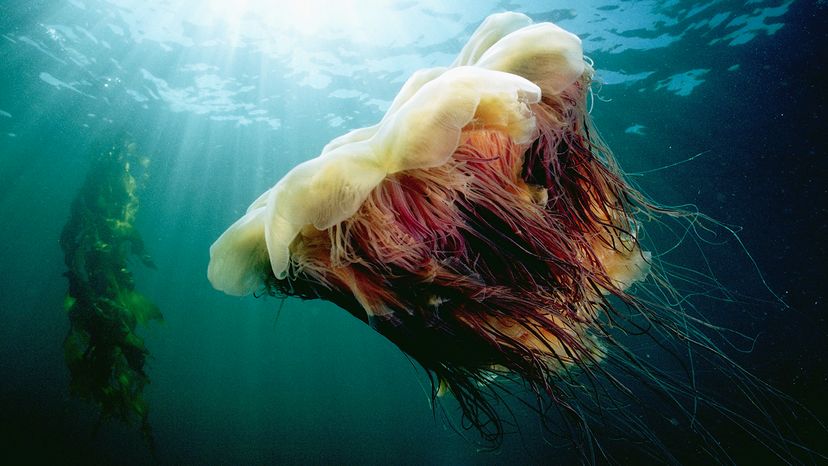
You could easily mistake an enormous lion's mane jellyfish for multiple smaller jellyfish clustered together. Stuart Westmorland / Getty Images

With its fiery tentacles and massive bell, the lion's mane jellyfish is one of the ocean's most striking creatures. Known scientifically as Cyanea capillata, this giant jellyfish haunts cold northern waters, including the North Pacific Ocean, North Sea, and Arctic.

It's not just big. It's the largest known species of jellyfish in the world.

Advertisement

Nicknamed the lion's mane, this jelly belongs to the family Cyaneidae, a group of true jellies. Despite their soft, gelatinous bodies, these animals are powerful predators.
Appearance and Anatomy

Lions Mane Jellyfish
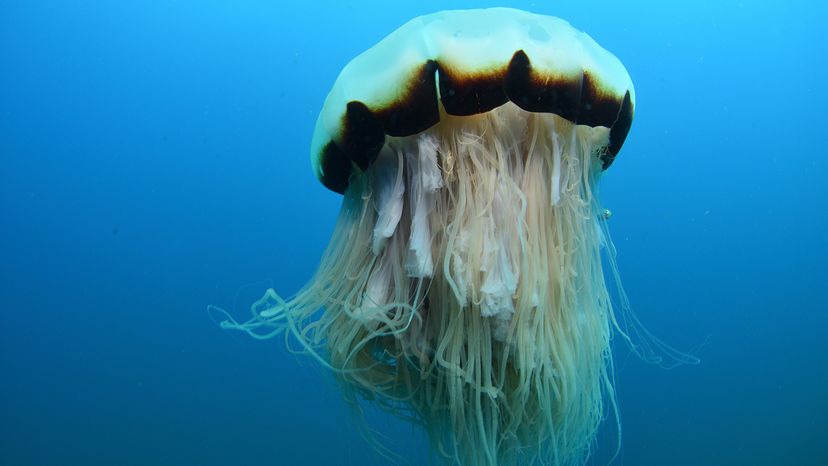
Lion's mane jellyfish grow up to 6.6 ft (2 m) in bell diameter. Light and Vision / Shutterstock

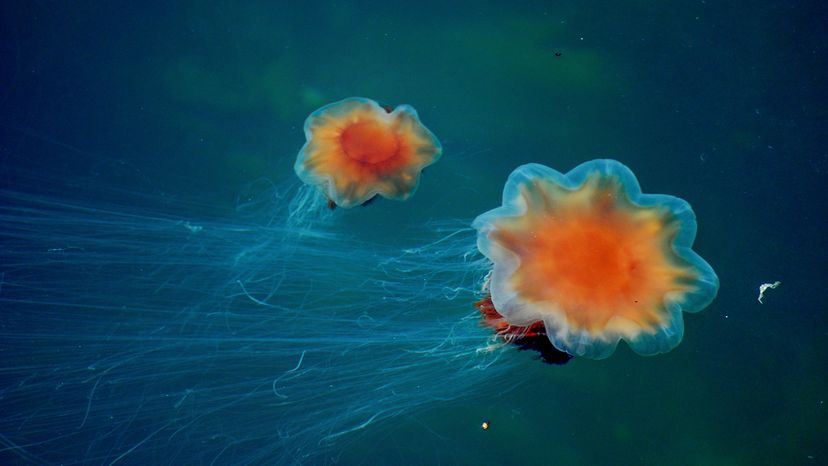
The lion's mane jellyfish gets its name from the thick mass of long, flowing tentacles that trail from its gelatinous bell. The bell itself can grow to a diameter of over 6.6 ft (2 m), though specimens in the Baltic Sea and other shallower areas tend to be smaller.

Underneath the bell are eight indentations that divide the body into symmetrical lobes. Hanging from here are clusters of oral arms and feeding tentacles. These are packed with stinging cells, or nematocysts, which paralyze prey like small fishes, tiny crustaceans, and other jellies.

Advertisement

Feeding and Behavior

Lion's mane jellies are continual swimmers, able to cover great distances in search of food. Their diet includes fish larvae, other jellyfish, and tiny planktonic animals. Prey caught in their tentacles is moved toward the mouth by oral arms on the underside of the bell.

These jellies are not passive drifters. They're active hunters, and their sting can be painful to humans.

Advertisement

While rarely life-threatening, stings from a lion's mane can cause redness, pain, and in some cases, more serious reactions.

Life Cycle and Reproduction

Lions mane jellyfish
That's a lot of tentacles for one jelly. Nigel Marsh / Getty Images/iStockphoto

Like other jellies, the lion's mane goes through a complex life cycle that includes both polyp and medusa stages. After external fertilization, sperm and eggs meet in the open water. The resulting larvae settle on a hard surface and develop into polyps.

In early spring, these polyps bud off baby medusae, which eventually grow into adults by late summer. Climate change may affect this cycle, with warming oceans influencing when and where jellyfish bloom.

Advertisement

Distribution and Habitat

You'll find lion's mane jellyfish near the coasts of Alaska, eastern Canada, Washington, and northern Europe. They prefer cold, open seas but can be spotted near shore during jellyfish blooms.

In some years, specimens wash up on beaches, startling swimmers with their size.

Advertisement

Though not ideal for aquariums (due to their size and sting), lion's manes continue to intrigue marine biologists. Even Sir Arthur Conan Doyle once used a lion's mane jellyfish as a murder weapon in a Sherlock Holmes story—a nod to its powerful sting and mysterious appearance.

We created this article in conjunction with AI technology, then made sure it was fact-checked and edited by a HowStuffWorks editor.

Advertisement

Advertisement

Loading...