Moon Jellyfish: Coastal Dwellers With Gentle Stingers

By: Nico Avelle  | 
Moon jellyfish
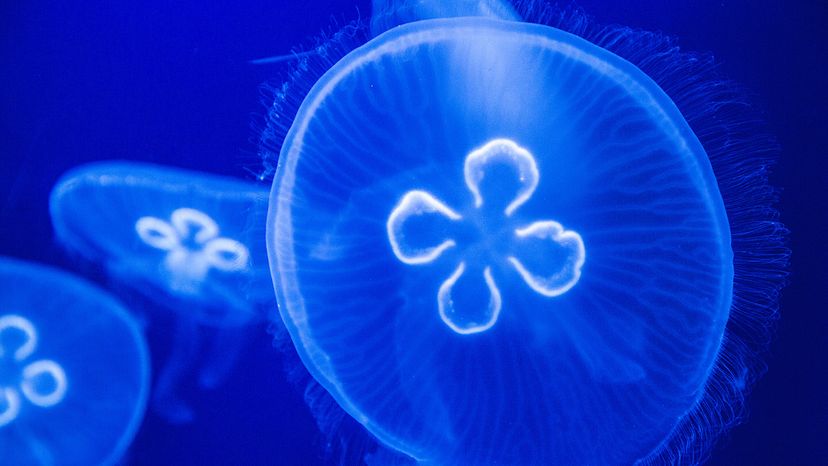
Look, ma—no brains! Jena Ardell / Getty Images

Moon jellyfish might look like ghostly saucers adrift in the blue, but they're more than just ocean ambiance. These translucent animals, known scientifically as Aurelia aurita, are part of a family of jellies that have lives perfectly tuned to drifting through the sea.

From their bell margin to their reproductive quirks, moon jellyfish are a species that’s both delicate and tough.

Advertisement

Unlike some of their jellyfish cousins, moon jellyfish lack long, potent stinging tentacles. That makes them relatively safe for humans, though their stinging cells can still irritate sensitive skin. They're commonly found near the coast, often found washed up on beaches in summer.
What Makes a Moon Jellyfish Unique?

The moon jelly differs from many common jellyfish in several ways. For one, its bell is rimmed with fine tentacles that capture food like zooplankton, plankton, and tiny crustaceans.

These tentacles lack strong stings, and prey is trapped in a layer of mucus that covers the jelly’s bell. Once caught, the feeding responses move food toward the central mouth and into the stomach.

Advertisement

Moon jelly
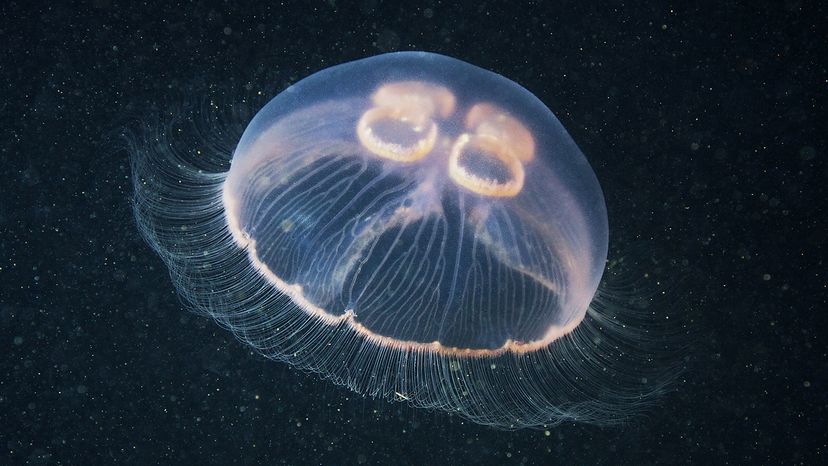
Moon jellies prove that you don't need to have a brutal sting in order to hunt effectively.
Connect Images/Alexander Semenov / Getty Images/Connect Images

Their four horseshoe-shaped gonads are visible through the translucent bell and can appear pink, bluish, or purple. These structures are involved in reproduction; males release sperm into the water and females’ eggs are fertilized internally, with embryos developing on the female’s oral arms.

Advertisement

How Moon Jellies Move Without a Brain

Moon jellyfish don’t have a brain or centralized nervous system. Instead, they pulse through the ocean using coordinated contractions of their swimming muscles located in the bell. These pulses help keep them near the surface, where their favorite food—plankton—is most abundant.

Despite lacking a brain, they display organized behavior, reacting to light and touch. This coordination comes from a nerve net and special sensory organs along the bell margin.

Advertisement

Anatomy Close-Up

Moon jellies have a soft body with a diameter that can reach 16 in (40 cm). The bell houses a stomach and the four oral arms. Their sting comes from stinging cells on their tentacles, though as previously mentioned, these are relatively weak.

Their life is short—just a few months in the wild.

Advertisement

The Jellyfish Life Cycle: From Buds to Adults

Their life cycle includes multiple stages. After fertilization, females carry the fertilized eggs on their oral arms until they develop into larvae. These attach to surfaces and grow into stationary polyps.

Each polyp can asexually produce buds, which eventually become medusae—the adult medusae moon jellies we recognize.

Advertisement

This efficient cycle helps explain their rapid population surges in protected or nutrient-rich areas. It also means they can grow in number quickly, especially when conditions are favorable.

What Eats Moon Jellyfish?

Moon jellyfish
Moon jellyfish serve as food for sea turtles and birds. John Dickson / Getty Images

Despite their mild sting, moon jellies are prey for many marine and coastal animals. Sea turtles, birds, and even some other jellyfish target them. Their sting is too weak to offer real defense against these specialized predators.

Still, their sheer abundance and ability to thrive in difficult environments allow them to dominate ecosystems. When many jellyfish bloom at once, they can disrupt food chains and reduce fish populations by eating the same zooplankton young fish need.

Advertisement

Where You’ll Find Moon Jellies

Moon jellies are frequent in temperate and tropical waters worldwide. Their distribution includes coastal areas of every ocean. They're especially commonly found where water is calm, warm, and rich in plankton—conditions often worsened by pollution or overfishing.

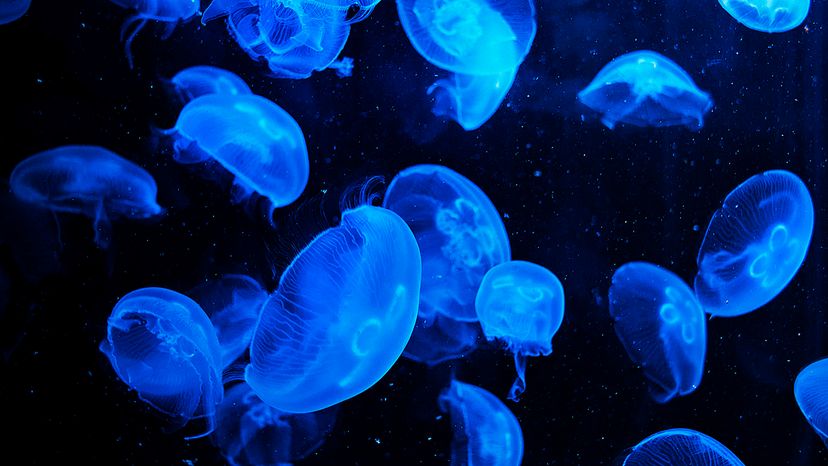
They're also a hit in the aquarium world. Special tanks help them swim in circles without getting caught in corners. Their familiar look and gentle glow make them ideal for education and public exhibits.

Advertisement

We created this article in conjunction with AI technology, then made sure it was fact-checked and edited by a HowStuffWorks editor.

Advertisement

Loading...