The Sea Angel Looks Like a Pixar Character Until It Attacks

By: Nico Avelle  | 
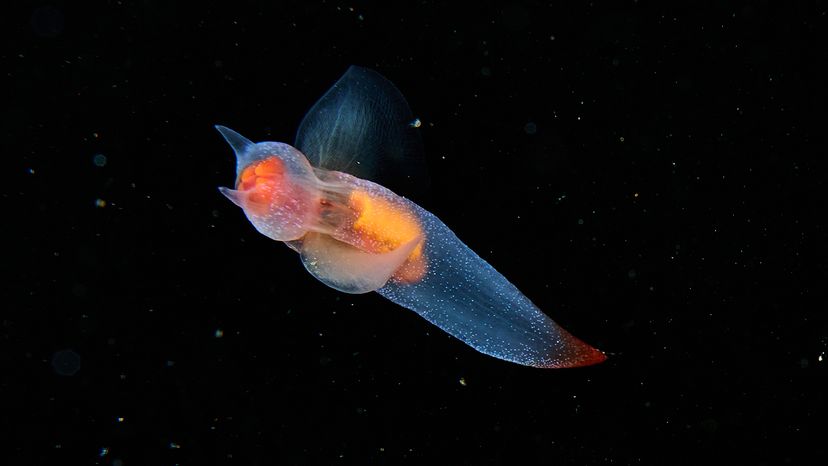
This looks terrifying until you realize it only grows up to 2 inches (5 cm) long. Connect Images/Alexander Semenov / Getty Images/Connect Images

The tiny sea angel drifts through the ocean with delicate wings. Despite the gentle appearance and graceful movements, this small animal is actually a prowling predator that hunts other swimming snails in the open ocean.

Sea angels are free-swimming sea slugs found throughout the world's oceans, especially in cold and temperate waters. They spend their lives floating in the water column rather than crawling along the seafloor like many of their land snail relatives. Scientists study these specialized predators closely because they reveal how unusual life can become when animals evolve to live entirely in open water.

Advertisement
How Sea Angels Differ From Sea Butterflies

sea angel
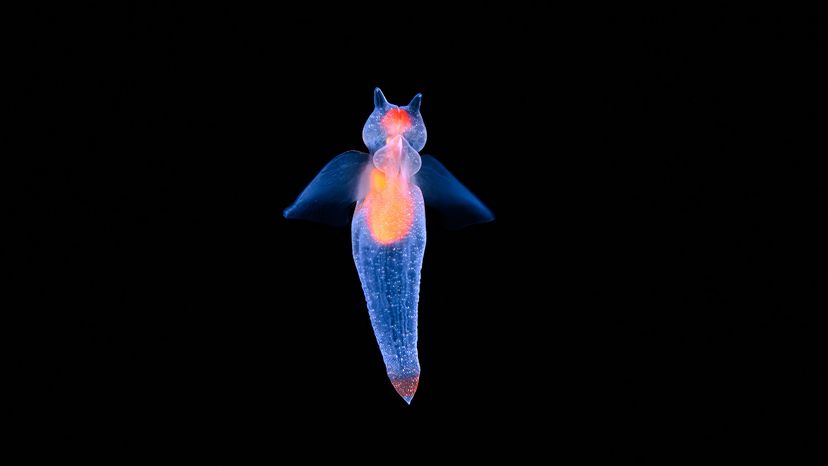
This looks like a character set to star in "Finding Nemo 3." Yiming Chen / Getty Images

A sea angel is a small swimming snail that belongs to the clade Gymnosomata within the larger mollusc group Heterobranchia. These animals are part of the order Pteropoda, which also includes their relatives the sea butterflies.

Unlike sea butterflies, sea angels do not have a shell. Sea butterflies usually keep a delicate shell while drifting through the ocean, but sea angels lose their embryonic shell within the first few days after hatching.

Advertisement

Mostly transparent, the sea angel has a small, gelatinous body. Even the largest species only reaches about 2 in (5 cm) long. Their soft bodies and winglike structures give them an almost angelic appearance as they move through the sea.

Where Sea Angels Live

Sea angels live throughout the world's oceans and are typically found in cold and temperate waters. They inhabit the open ocean rather than coastal freshwater systems, meaning they occur only in marine environments. Most sea angels occupy the water column from the surface down to about 1,969 ft (600 m). Some have been observed much deeper, with sightings reaching roughly 5,921 ft (1,805 m).

People rarely see them in the wild, not only because they're transparent, but because they drift far from the coast and often inhabit deep water. Observing a sea angel usually requires visiting a specialized aquarium such as the Monterey Bay Aquarium or joining a scientific research expedition in cold ocean regions.

Advertisement

How a Sea Angel Swims Through the Ocean

sea angel
Being able to see a sea angel's get seems otherworldly. Aleksei Miroliubov / Shutterstock

Sea angels evolved from ancestors similar to land snails. In those snails, movement comes from a muscular foot that slides across surfaces.

In sea angels, that muscular foot evolved into a pair of winglike structures called parapodia. These wings beat in a rhythmic flapping motion that propels the animal through open water.

Advertisement

The movement looks a bit like underwater flying. Each gentle stroke pushes the body forward through the water column and gives the creature its well-known angelic appearance.

A Graceful but Efficient Predator

The graceful movements of a sea angel might suggest a peaceful animal. In reality, these creatures are carnivorous predators that hunt other pteropods. Their main prey includes shelled sea snails known as sea butterflies. One well-studied species, Clione limacina, feeds almost exclusively on sea butterflies in the genus Limacina.

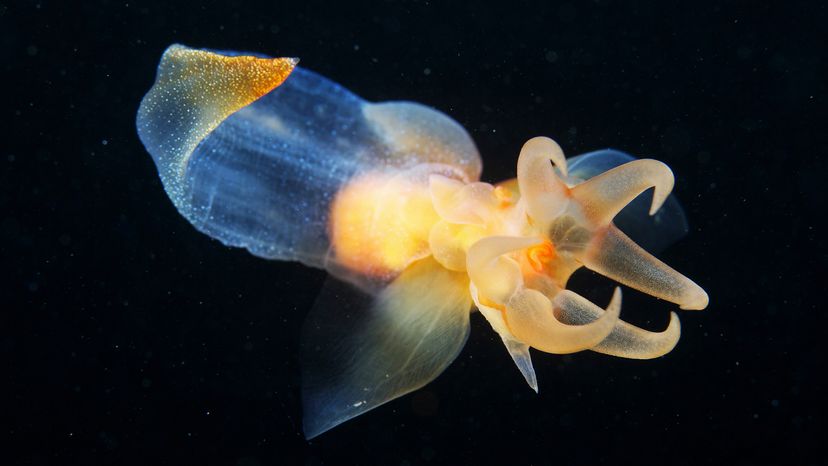
When a sea angel encounters prey, the whole process of capture begins quickly. The animal extends two specialized eating appendages from its head called buccal cones. Inside these structures are hook-like appendages that grab the prey.

Advertisement

The sea angel then pulls the snail from its shell and into its gut. A toothed radula — a ribbonlike structure covered in microscopic teeth — helps scrape the soft tissue from the shell. Depending on the situation, this feeding process can take anywhere from two minutes to about 45 minutes.

Some species behave as ambush predators that wait in the water column for prey to pass by. Others actively pursue their targets.

Advertisement

Life Cycle and Reproduction

Sea angels are protandrous hermaphrodites, meaning they start out male and turn female throughout the course of their lives. When two individuals meet, they can fertilize each other during a mating event that may last several hours.

After fertilization, the animal releases its eggs into the ocean in a floating gelatinous mass. These eggs drift freely in the water column until they hatch.

Advertisement

Young sea angels initially develop tiny shells during early embryonic stages. Within a few days, however, the shell disappears and the juvenile begins life as a fully free-swimming predator. These small animals play an important role in ocean food webs because they prey on other pteropods and in turn become food for fish and larger marine animals.

Why Scientists Pay Attention to Sea Angels

Researchers often study sea angels alongside sea butterflies because sea butterflies respond strongly to changes in ocean chemistry. Increasing ocean acidification can weaken the shells of sea butterflies, which may affect the predators that depend on them for food.

This connection makes sea butterflies an important indicator of environmental changes in marine ecosystems. A shift in sea butterfly populations could ripple through the food web and affect predators like Clione antarctica and other related species. For that reason, scientists frequently record videos of these animals swimming in cold waters to better understand their behavior and ecology.

Advertisement

We created this article in conjunction with AI technology, then made sure it was fact-checked and edited by a HowStuffWorks editor.

Advertisement

Loading...