White Spotted Jellyfish: Cute Until They Become Invasive

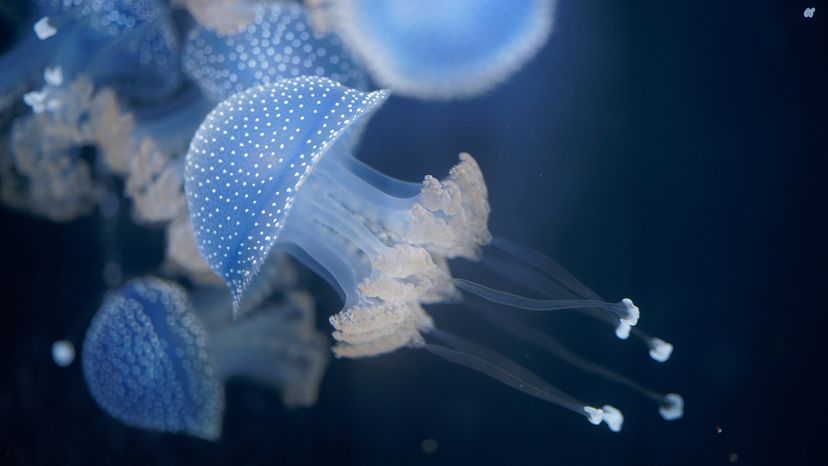
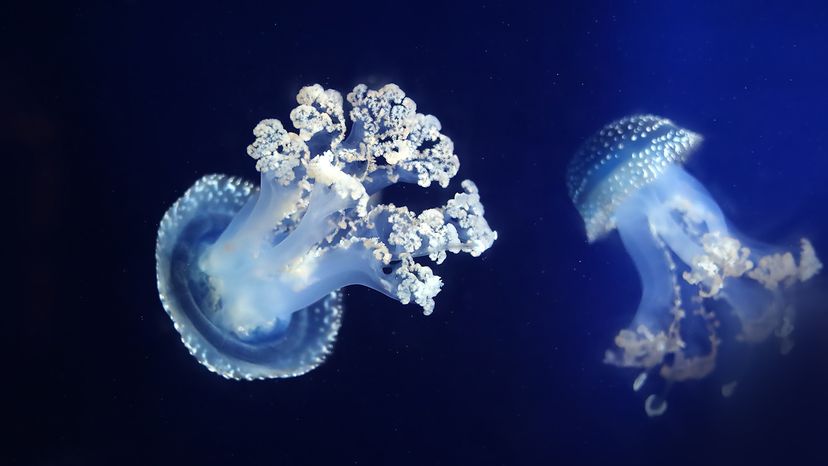
When these cauliflower-esque jellies venture beyond their natural habitat, they become a threat to indigenous species. Dobra Kobra / Shutterstock

You’ve probably seen them in aquarium tanks or floating just offshore—those milky, gelatinous blobs with polka dots and long, frilly arms. Meet the white spotted jellyfish (Phyllorhiza punctata), a tropical jellyfish invader that's turning up far from home.

Originally native to the western Pacific and warm temperate seas near eastern Australia, this jellyfish has expanded its reach across the globe. The white spotted jellyfish now appears in the Gulf of Mexico, the Caribbean, the Hawaiian Islands, and even the Mediterranean coast.

Advertisement
Not Just Another Jellyfish

jellyfish
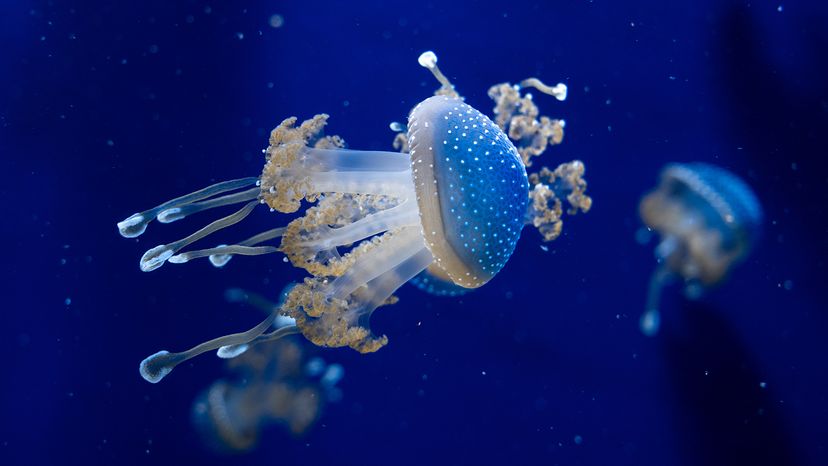
These beautiful sea beings have an outsize impact on marine food webs. AndrewAM / Shutterstock

While they look harmless, these jellyfish can seriously disrupt local ecosystems. The white spotted jellyfish is considered an invasive species by the Smithsonian Environmental Research Center and tracked in the Nonindigenous Aquatic Species Database.

They consume plankton, fish eggs, and larval fish—key food sources for native species—and their presence can significantly affect marine food webs.

Advertisement

These jellyfish flourish in areas with a seasonally fluctuating salinity regime, such as coastal Georgia and the northern Gulf. Massive jellyfish blooms can reduce the availability of zooplankton and disrupt native ecosystems, especially in regions where marine animals rely on planktonic prey.

A Reproductive Machine

The life cycle of P. punctata makes it especially adept at biological invasions.

Male jellyfish release sperm into the water, which the female jellyfish gathers to fertilize her eggs. These develop into larvae that settle on the ocean floor in the polyp stage, where they can produce new jellyfish through budding.

Advertisement

These polyps allow the species to persist and expand even without constant reproduction. In warm waters like those of the South Atlantic and Indo-Pacific Ocean, this reproductive flexibility makes it hard to contain the spread.

Economic and Ecological Implications

jellyfish
Did you know this little creature could disrupt entire economies? Monqui Pong / Shutterstock

White spotted jellyfish are not just an ecological concern; they have economic implications too. In places like Southern California, Western Australia, and the Gulf waters near Texas and Louisiana, P. punctata can clog fishing nets, damage fishing gear, and disrupt shrimp fishery operations.

In times of low salinity, these jellyfish lose their symbiotic algae (zooxanthellae), which reduces their ability to survive in nutrient-poor waters.

Advertisement

Researchers have observed that dense blooms of P. punctata can significantly reduce zooplankton populations and potentially lower fish larvae survival, leading to changes in aquatic food webs.

This non-indigenous jellyfish poses risks to several species, especially those in early life stages like bivalve larvae and larval fish. Important fish species often see reduced survival when jellyfish consume available plankton.

Advertisement

How Did These Jellyfish Spread So Far?

Scientists believe that ship-mediated transport (for example, polyps on ship hulls or medusae in ballast water) is a primary vector for the spread of P. punctata. Once introduced, these jellyfish have few predators and plenty of available prey.

Reports from the Pacific to the Atlantic confirm that Phyllorhiza punctata has spread beyond its native range via human activity, with introduced populations now in North America, Hawaii, the Caribbean, Brazil, and the Mediterranean.

Advertisement

In the Hawaiian Islands, local researchers from the Hawaii Biological Survey have documented how invasive species like P. punctata thrive in ocean waters where they face few natural predators, allowing them to proliferate due to reduced predation pressure.

Their floating bell, large oral arms, and ability to reproduce rapidly give them an edge over other species.

Advertisement

Managing an Invasive Species

Efforts to manage these invasive jellyfish focus on early detection and monitoring by programs like National Invasive Species Information. Regional coordination is crucial, especially in areas where P. punctata has become established outside its native range.

While property damage or public health threats are less common, their effect on food webs and economic activity is significant.

Advertisement

Managing ballast water, monitoring jellyfish populations, and sharing data through networks like Aquatic Invasions and the Smithsonian Marine Station may help limit their spread.

We created this article in conjunction with AI technology, then made sure it was fact-checked and edited by a HowStuffWorks editor.

Advertisement

Advertisement

Loading...