10 Cutest Snake Species That Have Us Squeeing

By: Nico Avelle  | 
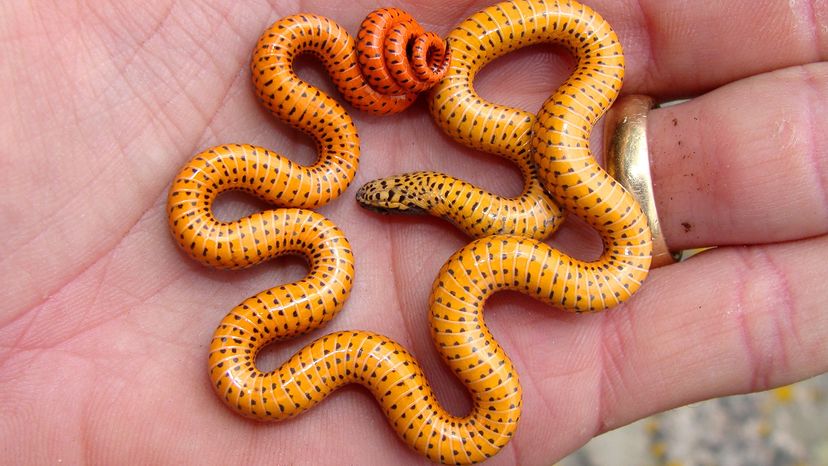
We'll be honest: Some of these are a lot cuter when you realize how tiny they are. Matt Jeppson / Shutterstock

Not everyone thinks "cute" when they hear the word "snake," but some serpents are changing hearts and memes alike.

While the cutest snake might not be your first thought for a pet, these reptiles are small, generally harmless to humans, and full of charm.

Advertisement

Whether it’s their tiny heads, big eyes, or shy slither, these snakes have found their way into the internet's collective heart. From grasslands to pet shops, they're stealing the spotlight across sites, videos, and social platforms.
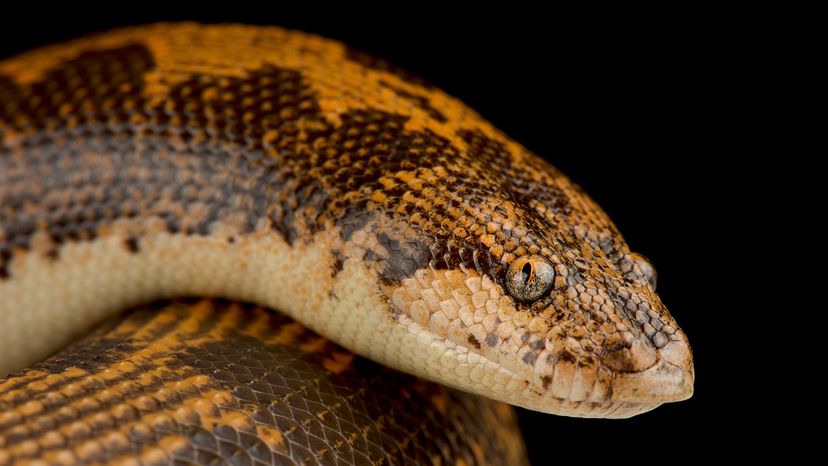
1. Arabian Sand Boa

snake
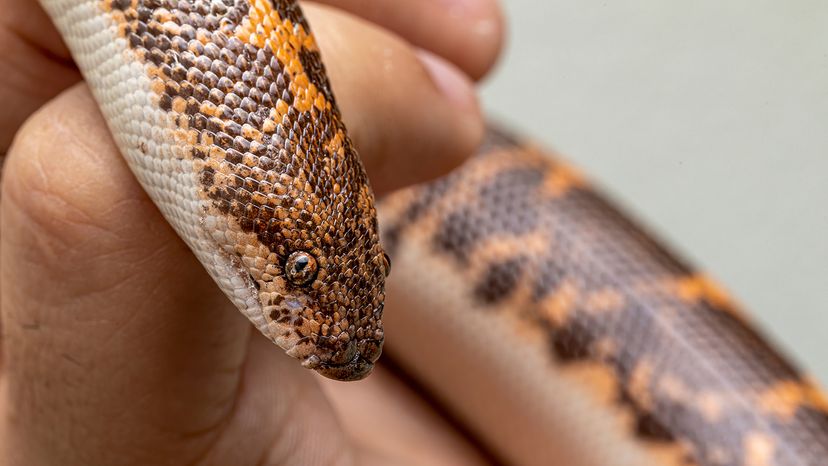
Arabian sand boa. Murilo Mazzo / Shutterstock

The Arabian sand boa looks like a cartoon snake brought to life. It has bug-like eyes perched on top of its head and a permanent smirk.

Found in Middle Eastern deserts, it burrows in sand and rarely grows longer than 16 in (40 cm). It’s become a frequent star in internet memes and Instagram posts.

Advertisement

2. Ball Python

snake
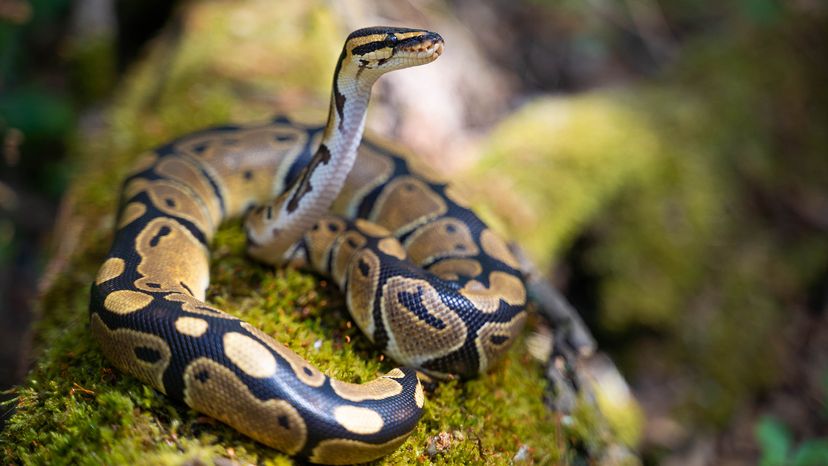
Ball python. Egoreichenkov Evgenii / Shutterstock

A favorite among pet owners, ball pythons are calm, curious, and known to curl up into little spirals. Native to African grasslands, these pythons come in hundreds of color patterns.

They’re so docile, they’re often a first pet snake for kids and can live comfortably in a home terrarium. These snakes respond well to handling and can be a long-term companion.

Advertisement

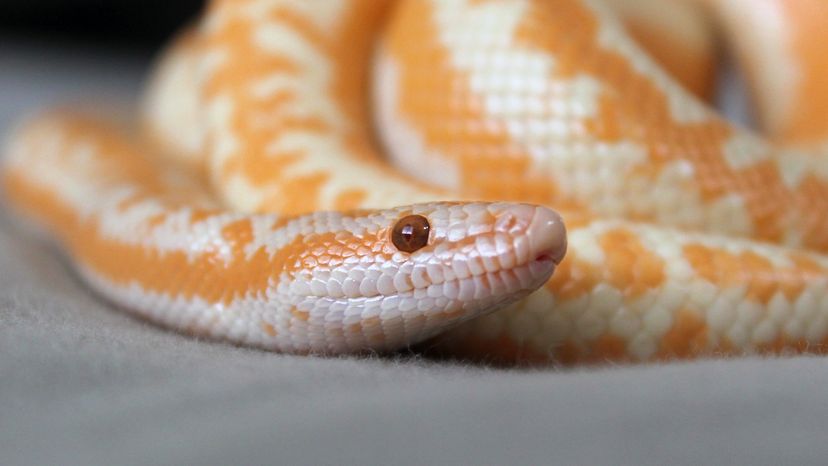
3. Hognose Snake

snake
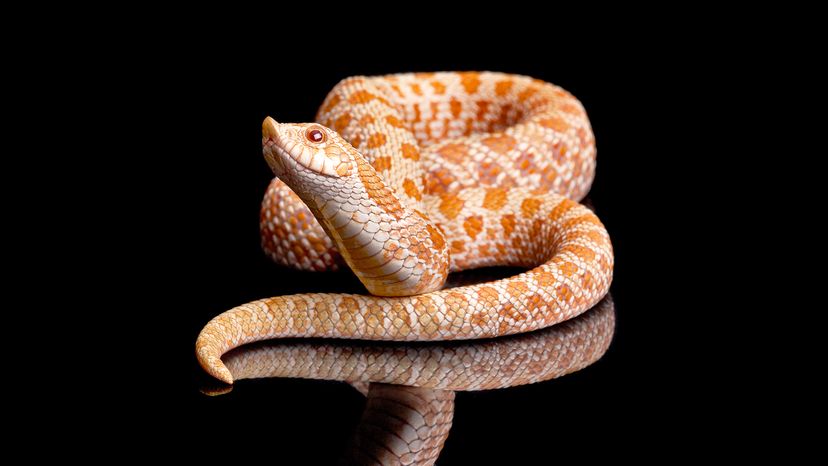
Albino hognose snake. Drasna / Shutterstock

The upturned snout gives the hognose snake a playful look. But it's not just cute; it's dramatic. When threatened, it flattens its head like a cobra or plays dead, belly-up.

Their sense of drama has earned them lots of viral content online. They live in North America, eat amphibians and insects, and rarely bite.

Advertisement

4. Ringneck Snake

snake
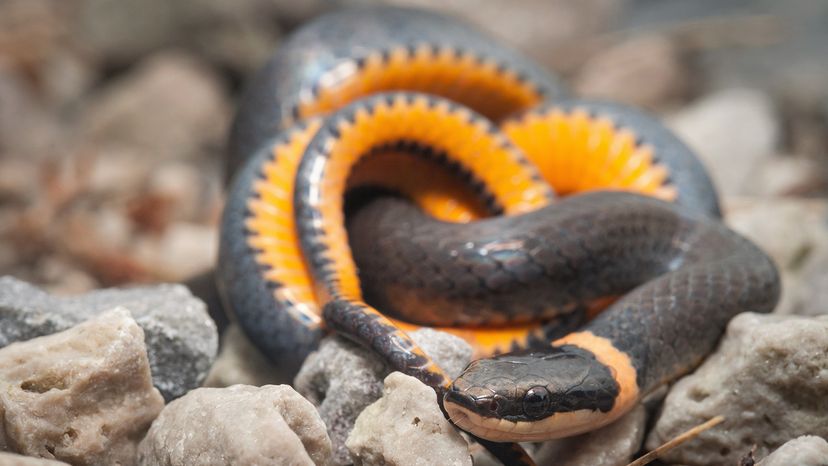
Ringneck snake. Mike Wilhelm / Shutterstock

With its black body and bright-orange neck band, the ringneck snake is a tiny flash of color under leaves and logs. It only grows to about 10 in (25 cm) and is harmless to humans.

Although rarely seen in the wild, their small size and docile nature make them one of the cutest snakes you might discover while hiking.

Advertisement

5. Eyelash Viper

snake
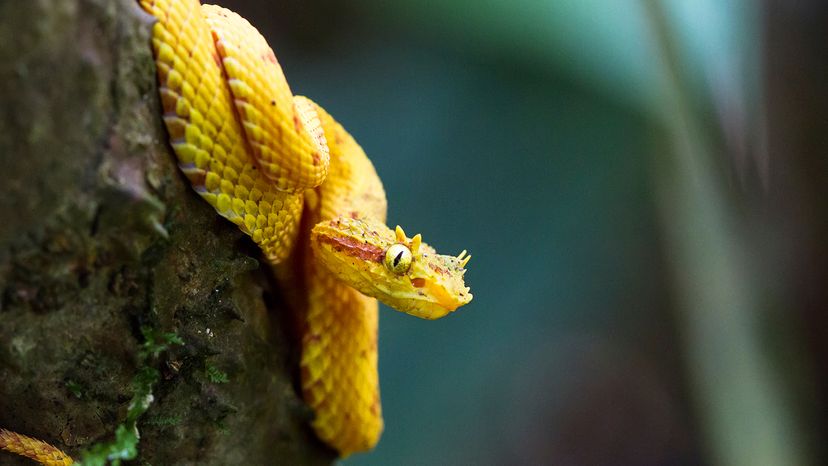
Eyelash viper. Kevin Wells Photography / Shutterstock

Don't let the name fool you. This snake's "eyelashes" are just raised scales above the eyes, and they give it a startled, wide-eyed appearance.

Native to Central and South America, the eyelash viper is beautiful, tiny, and brightly colored. While venomous, its vibrant look makes it a favorite in wildlife photography and reptile review content.

Advertisement

6. Corn Snake

snake
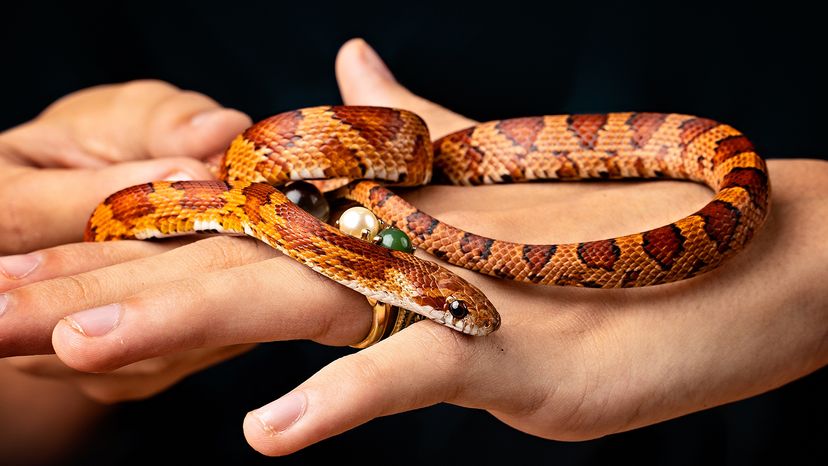
Corn snake. Luiza Kleina / Shutterstock

Corn snakes are smooth, colorful, and easy to handle. They help control rodent populations on farms.

Their gentle nature and striking patterns make them one of the most popular pet snakes in the U.S. These snakes are frequently treated as beginner-friendly reptiles and are often featured in content about reptile care, breeding, and feeding.

Advertisement

7. Kenyan Sand Boa

snake
Kenyan sand boa. reptiles4all / Shutterstock

Think of the Kenyan sand boa as the chunky baby of the snake world. It has a short, fat body, tiny head, and barely visible eyes. It spends most of its time buried in warm sand, surfacing to eat small lizards or rodents.

These snakes are often kept as pets due to their minimal space needs and calm behavior.

Advertisement

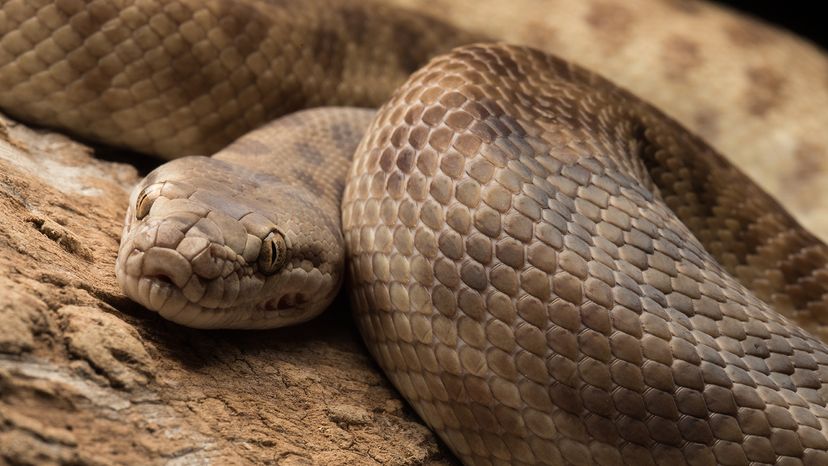
8. Children’s Python

snake
Children's python. LIGHTITUP / Shutterstock

Despite the name, this species wasn't named for kids but for the scientist John George Children. Still, it’s a perfect pet for beginners.

Native to Australia, it usually grows to around 3.3 ft (1 m), eats small mammals, and thrives in a well-controlled habitat. Its calm nature makes it a standout for people new to keeping snakes.

Advertisement

9. Rosy Boa

snake
Albino rosy boa. desenaphoto / Shutterstock

The rosy boa is one of only two native boa species in the United States. It's slow-moving, easy to handle, and has a friendly face that's often described as smiling. They adapt well to human contact and can be raised on a simple diet of thawed mice.

They're also used in educational programs to help people learn about reptiles.

Advertisement

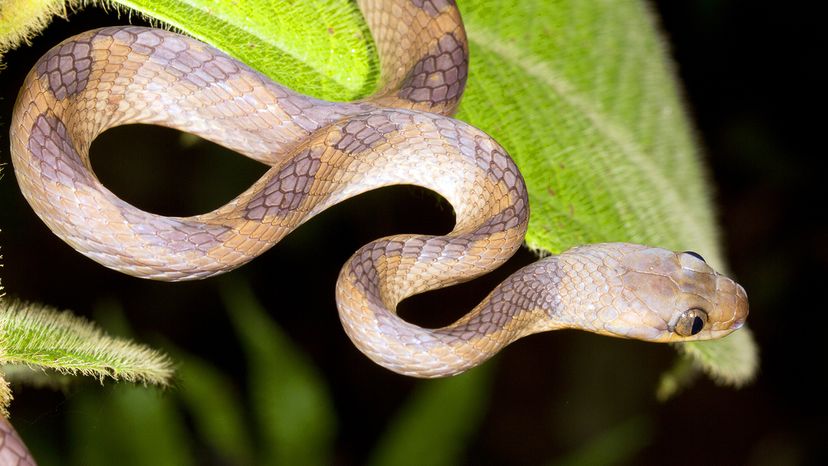
10. Banded Cat-eyed Snake

snake
Cat-eyed snake. Dr Morley Read / Shutterstock

With big eyes and a soft expression, the banded cat-eyed snake has been nicknamed the anime snake for its large eyes.

It eats frogs and lizards and prefers humid, tropical climates. Though it has mild venom, it's not dangerous to humans. You’ll find it featured in nature videos highlighting its unusual look and gentle demeanor.

We created this article in conjunction with AI technology, then made sure it was fact-checked and edited by a HowStuffWorks editor.

Advertisement

Loading...