12 Arctic Animals That Stay Warm (and Adorable) in Subzero Temperatures

By: Nico Avelle  | 
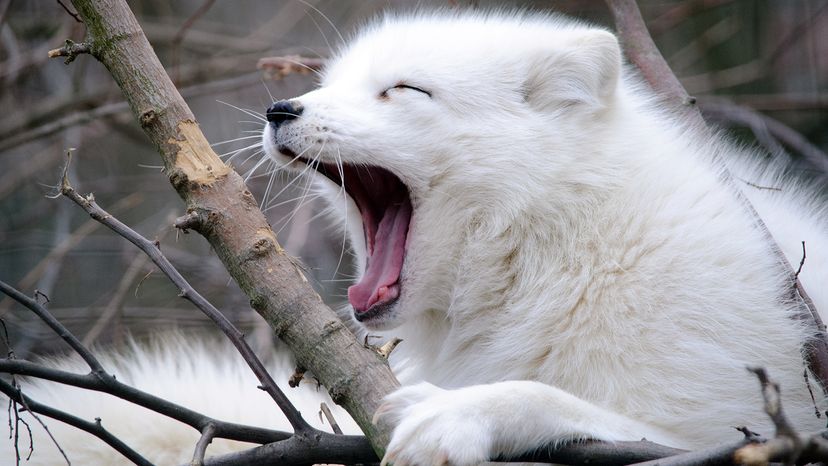
The Arctic fox's coat turns white during the winter to provide camouflage in the snow. Blanka Berankova / Shutterstock

The arctic animals that live in the far north survive in some of the harshest conditions on Earth. Winter temperatures plunge far below 0 degrees Fahrenheit (minus 18 degrees Celsius), sea ice drifts across the Arctic Ocean, and darkness lasts for months.

Yet animal life thrives across the Arctic region. From apex predators like polar bears to tiny seabirds nesting in large colonies, Arctic wildlife has evolved thick fur, clever migratory patterns, and surprising survival tricks.

Advertisement

Here are 12 remarkable species that thrive across the tundra, pack ice and cold Arctic waters. These animals live across the Arctic Circle—from the Canadian Arctic and Baffin Island to the Russian Arctic, the Svalbard archipelago, and the icy coasts of east Greenland and west Greenland.

1. Polar Bears

Polar bears dominate the Arctic food web as a powerful apex predator. Their black skin absorbs sunlight while thick fur and fat insulate them against brutal Arctic winter temperatures.

They roam sea ice and ice floes across the Arctic Ocean searching for their primary food source: ringed seal and bearded seal. As climate change causes sea ice to shrink, these Arctic animals must swim longer distances between hunting grounds.

Advertisement

2. Arctic Wolves

The Arctic wolf survives in the high Arctic where few other predators live. These wolves roam remote land masses across the far north including northern Greenland and the Canadian Arctic.

Unlike gray wolves farther south, Arctic wolves depend on prey such as wild reindeer, musk oxen, and Arctic hare. Their dense coat allows them to withstand extreme environments where winter temperatures plunge well below minus 40 degrees Fahrenheit (minus 40 degrees Celsius).

Advertisement

3. Musk Oxen

Musk oxen look like shaggy relics from the Ice Age. Their long outer hair—called guard hair—drapes almost to the ground and protects a dense undercoat that traps heat.

These plant eaters graze tundra grasses across Baffin Island and other parts of the Arctic region during the short summer months. When predators approach, the herd forms a defensive circle with horns facing outward.

Advertisement

4. Arctic Fox

The Arctic fox survives winter by switching coats. In winter its fur can turn bright-white to blend into snow across the tundra. During warmer months the coat can shift to brown or gray.

These clever hunters eat small mammals, bird eggs, and leftovers from larger predators. Their thick fur covers even their paws, allowing them to walk across pack ice without losing body heat.

Advertisement

5. Arctic Hare

The Arctic hare resembles a snowball with legs. This species lives in the high Arctic of Canada and Greenland where snow can blanket the tundra most of the year.

Arctic hares feed on woody plants and moss hidden beneath snow. They rely on speed and camouflage to avoid predators like Arctic wolf and snowy owls.

Advertisement

6. Beluga Whales

Beluga whales are among the most recognizable marine mammals in cold Arctic waters. Their white bodies blend with drifting sea ice.

These whales produce a huge range of vocal sounds, earning them the nickname "canaries of the sea." Pods migrate along coastal areas each year.

Advertisement

7. Bowhead Whales

Bowhead whales rank among the longest-living mammals on Earth. Scientists have discovered individuals more than 200 years old.

These giants push through thick pack ice using massive skulls. They filter plankton from cold Arctic waters and migrate seasonally.

Advertisement

8. Greenland Shark

The Greenland shark lurks deep in the Arctic Ocean. This slow-moving predator grows extremely slowly and may live for centuries.

Researchers studying these sharks estimated that some individuals may be close to 400 years old. They feed on fish, seals, and other animals in dark, icy water.

Advertisement

9. Snowy Owls

Snowy owls patrol the tundra for small mammals such as lemmings. Their white feathers provide camouflage against snow-covered landscapes.

During years when prey becomes scarce, these birds travel south beyond the Arctic Circle. In strong prey years they nest at higher densities across the tundra.

Advertisement

10. Arctic Terns

Arctic terns complete one of the longest migrations on Earth. These bird species travel from the Arctic to Antarctica and back every year.

Their migratory patterns allow them to experience two summers each year. During late summer in the Arctic, they gather along coastal areas and feed on fish in cold Arctic waters.

11. Yellow-Billed Loons

Yellow-billed loons breed in remote tundra lakes across Alaska and northern Canada. These large diving birds hunt fish and crustaceans.

They nest on tundra lakes during the short Arctic summer while the ice recedes. After the breeding season they migrate south to spend winter on the open ocean.

12. Puffins

Puffins nest in colonies along cliffs in places like the Faroe Islands and the Svalbard archipelago. Their colorful bills stand out against dark feathers.

These seabirds dive into cold waters to catch fish. Their playful nature and clumsy walk on land make them favorites among intrepid explorers visiting the Arctic on expedition cruise ships.

Coexisting With Humans

Arctic peoples have lived alongside these animals for thousands of years. Today human activity, habitat loss, and climate change are reshaping wildlife habitats across the far north.

Travelers who take an Arctic cruise sometimes witness these species under the glow of the northern lights—also known as the aurora borealis—dancing across the sky above the North Pole.

We created this article in conjunction with AI technology, then made sure it was fact-checked and edited by a HowStuffWorks editor.

Advertisement

Loading...