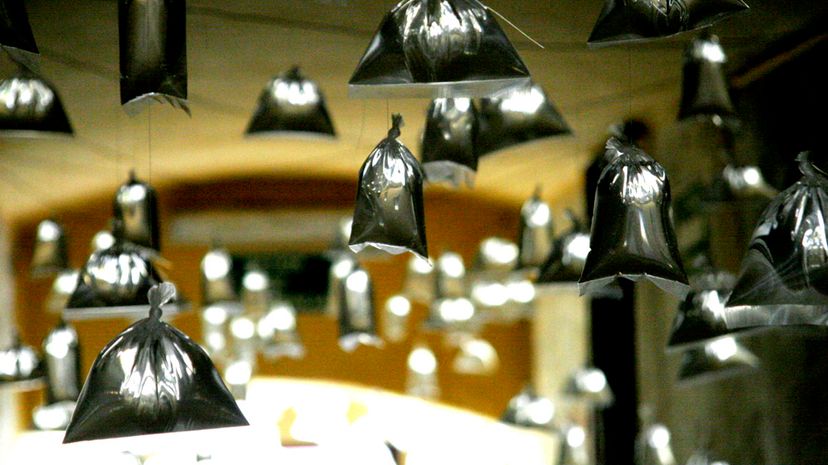
Perhaps you've visited a restaurant and seen clear, water-filled bags hanging on the doors or cinched up in the outdoor dining area. You might ask, "What's all this about? Some crazy new way to control temperature? A scheme to save money on water pitchers?"
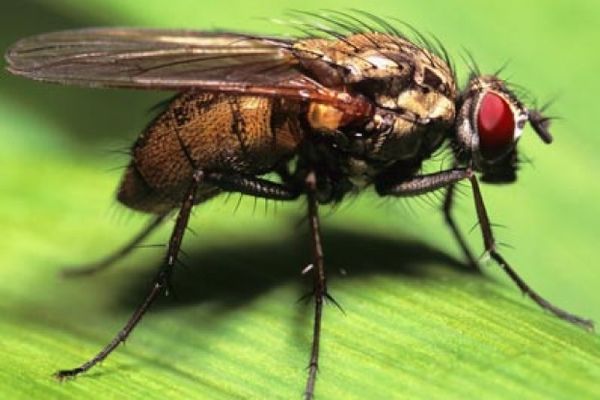
While any effect on temperature is purely incidental, these hanging bags are all about driving pests away. People hang these bags outside their homes, businesses and even in their barns to drive flies away.
Advertisement
Various takes on the water-bag practice exist. Some advocates insist the bag must have flakes of floating tin foil; others say a penny or two. A couple of industrious websites even offer commercial takes on the concept, selling specially designed water bags to be used as repellents.
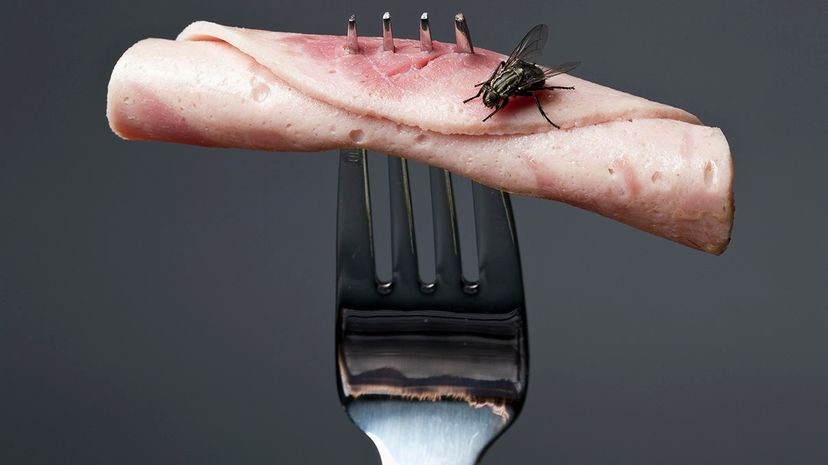
After all, flies spend much of their time buzzing around such germ havens as dumpsters and animal carcasses and droppings. Then, loaded down with germs, they swarm around your chicken sandwich — it's only natural that you'd want to keep them away. Plus, flies aren't just annoying; they carry diseases.
But how can a bag of water help? Does it even work? Experts and amateurs are split on the question. Let's examine both sides of the issue.
Advertisement