What's the Country With the Most Wild Tigers?

By: Nico Avelle  | 
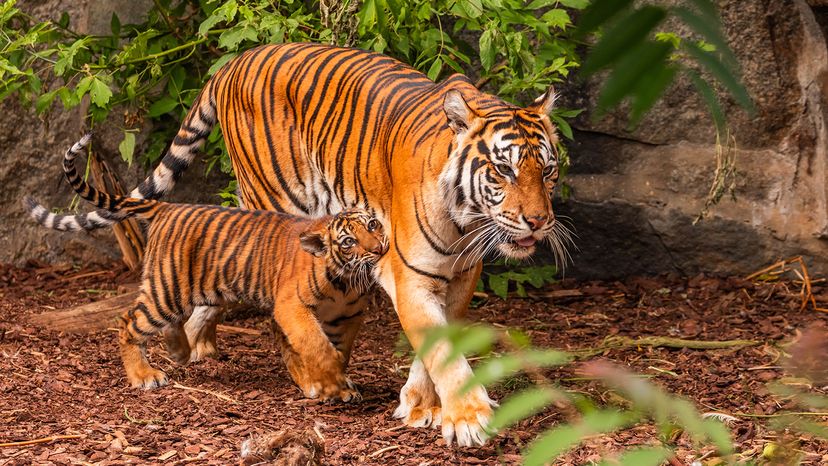
To be clear, we're talking about tigers that don't live in captivity (so zoos don't count). Elen Marlen / Shutterstock

If you are asking about the country with the most wild tigers, the answer is clear, but the story behind it spans conservation, habitat loss, and decades of recovery work.

A century ago, wild tigers ranged across much of Asia. Today, only a few countries still support a surviving population.

Advertisement

The following list ranks countries by their most recent national surveys and best estimates of wild tiger numbers.

1. India

India is the country with the largest wild tiger population in the world. According to the most recent national survey, India is home to roughly three-quarters of all wild tigers left globally (with an estimated 3,682 wild tigers in 2022).

Tigers living in India occupy national parks and protected areas connected by forests that support prey species like sambar deer.

Advertisement

Strong anti‑poaching efforts, habitat connectivity, and long‑term conservation programs such as those centered around Jim Corbett National Park have produced promising signs, including stable breeding populations with female tigers raising cubs.

2. Russia

Russia has the second-largest wild tiger population (approximately 750 Amur tigers) concentrated in the Russian Far East. These Amur tigers live in vast forests near the China border, where low human density allows each male tiger to maintain a large own territory.

Conservation efforts and strict protection have helped rebuild this population from near extinction, giving them the most stable wild tiger numbers outside South Asia.

Advertisement

3. Indonesia

Indonesia is the only country where tigers survive on islands. The country’s remaining wild tiger population consists entirely of critically endangered Sumatran tigers (fewer than 400 mature individuals left in the wild) found in Sumatra’s dense jungles.

Habitat loss, illegal wildlife trade, and human encroachment continue to threaten them, but protected areas and camera trap monitoring have identified small new breeding populations.

Advertisement

4. Nepal

Nepal has achieved one of the most successful tiger conservation stories.

Despite its small size, Nepal has increased its national tiger population to 355 tigers through coordinated conservation efforts (including transboundary programs with India).

Advertisement

National parks support a healthy breeding population, and anti‑poaching enforcement has reduced losses from illegal hunting.

5. Thailand

Thailand holds the largest remaining tiger population in mainland Southeast Asia (estimated 179 to 223 wild tigers as of 2024).

Wild tigers in Thailand are primarily found in the western part of the country, where protected forests still support sufficient prey. Conservationists use camera traps and surveying tigers to track population recovery after decades of rampant poaching.

Advertisement

6. Malaysia

Malaysia’s wild tiger population is critically low but still present. Tigers remain in the Malay Peninsula, though habitat loss and poaching have pushed them to the brink of extinction in the wild (fewer than 150 Malayan tigers remained as of 2022).

Conservation programs are racing to protect the last surviving population before numbers fall further.

Advertisement

7. Bhutan

Bhutan supports a small but important wild tiger population (about 131 tigers, according to the 2021–2022 national survey).

Tigers here range from lowland forests to high mountain areas, showing unusual habitat flexibility. Protected areas and low human pressure have helped maintain this population.

Advertisement

Countries Where Tigers Are Nearly Gone

Cambodia, Laos, and Vietnam no longer have viable wild tiger populations, while China supports only a very small number near the Russian border.

In these places, poaching, habitat destruction, and declining prey wiped out the last tiger within recent decades.

Advertisement

Why India Leads the World

India’s success comes from scale and sustained effort. Large forests, abundant prey, national parks, long‑term surveys, and coordinated conservation across states allowed tiger numbers to recover.

While captive tigers exist, India’s wild tiger population plays a crucial role in global big cat conservation.

Advertisement

The Future of Wild Tigers

Wild tigers remain endangered worldwide. As you can see, only a few countries now support viable breeding populations. Continued anti‑poaching efforts, habitat protection, and international cooperation are essential if wild tigers are to survive beyond this century.

We created this article in conjunction with AI technology, then made sure it was fact-checked and edited by a HowStuffWorks editor.

Advertisement

Loading...