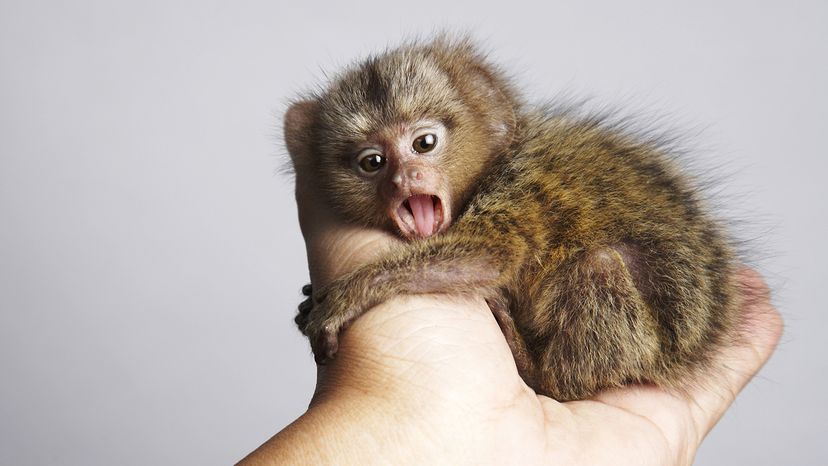
As adorable as this pygmy marmoset is, trying to keep it as a pet would cause it immense amounts of stress. anythings / Shutterstock
Some animals are so small they seem more like toys than creatures of the wild. Take the finger monkey, for example. Also known as the pygmy marmoset, it's the smallest monkey in the world and could fit snugly in the palm of your hand.
But don't let the size fool you. These tiny monkeys have complex lives shaped by the forests of South America, intricate social behavior, and a role in the global pet trade.
Finger monkeys are a type of pygmy marmoset, part of the marmoset monkeys group. As New World primates, they're native to the Amazon region and thrive in the forest trees of Brazil, Colombia, Ecuador, Peru, and Bolivia.
Adults grow to about 4.7 to 6.2 in (12 to 16 cm) long, excluding a tail that nearly doubles their total length.
Advertisement
Their name comes from being tiny enough to wrap their hands and feet around a human finger as if the finger were a tree trunk. These monkeys weigh just 3.5 to 5 oz (100 to 140 g) at full size.
Life in the Treetops
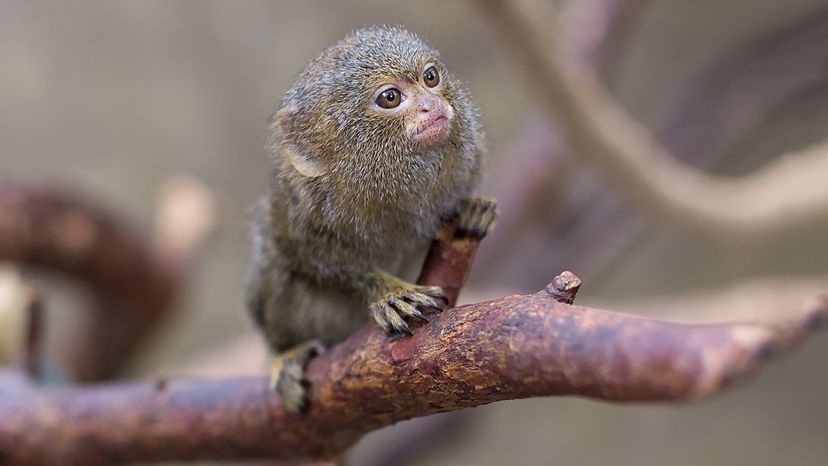
If you thought other animals were tiny, you've never seen a finger monkey on a narrow branch. Andrey E. Donnikov / Shutterstock
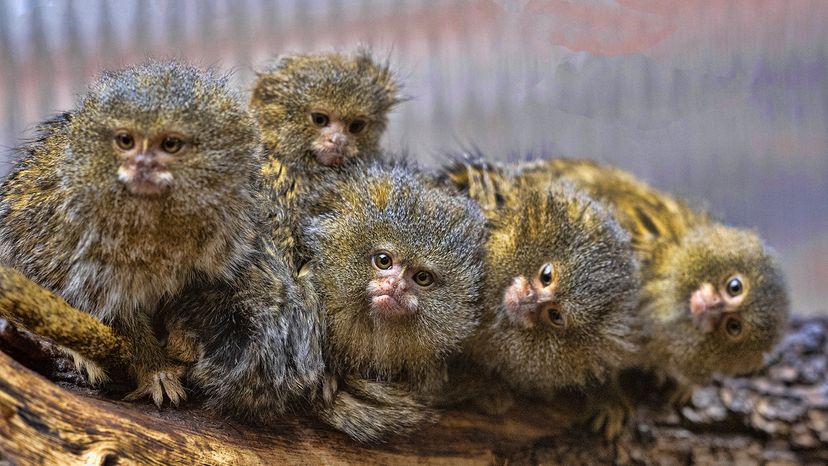
Finger monkeys live in small troops ranging from as few as two up to about nine individuals (around five members on average). They spend almost all their time in trees, using their claw-like nails to climb vertically up tree trunks.
They eat a specialized diet of tree sap, gum, insects, and fruits. By gnawing tiny holes into bark, they get a steady sap supply, which makes up a large portion of their food.
Advertisement
Mothers typically give birth to twins, and the entire troop helps raise the young. The father often carries the babies when the mother isn't nursing. This shared parenting strategy gives the babies more attention and care, improving their chances of survival.
Are Finger Monkeys Good Pets?
Pygmy marmoset families aren't big on personal space. Vladislav T. Jirousek / Shutterstock
The idea of owning such an adorable, tiny primate might sound appealing, but finger monkeys do not make good pets. While some people in the U.S. try to buy them, these animals have very specific social, dietary, and environmental needs.
Finger monkeys rely on constant interaction with their troop and become severely distressed if isolated. They have a tendency to bite when scared or stressed, especially when handled by unfamiliar humans.
Advertisement
Their lifespan in the wild is about 12 years, but in captivity they commonly suffer health issues (like malnutrition) and stress-related behavioral problems if not given expert care.
Legal restrictions also apply. Many countries strictly regulate or ban the import and ownership of primates (including finger monkeys) to protect both the animals and people.
Advertisement
Finger Monkeys and Their Primate Cousins
Finger monkeys belong to the Callitrichid family, which includes tamarins and other small monkeys. Like other new world primates, they have flat noses and tend to live in trees rather than on the ground.
Their close relatives share many behaviors, such as cooperative parenting and sap feeding.
Advertisement
Compared to larger primates, finger monkeys exhibit some surprising traits. For example, they use vocal calls to mark their territories and defend their groups, showing a range of emotions and social complexity not always associated with such small animals.
Watching Finger Monkeys in the Wild
If you're interested in finger monkeys, the best way to see them is in their natural habitat. The Amazon rainforest offers a rich ecosystem where these animals thrive. Some eco-tours and conservation groups offer opportunities to watch them leap through the branches, feed on sap, and interact with their troop.
This is the most respectful way to appreciate finger monkeys—as part of a delicate web of life in South America's forests, not as pets in a cage.
Advertisement
We created this article in conjunction with AI technology, then made sure it was fact-checked and edited by a HowStuffWorks editor.
Cite This!
Please copy/paste the following text to properly cite this HowStuffWorks.com article: