What Is a Group of Coyotes Called?

By: Nico Avelle  | 
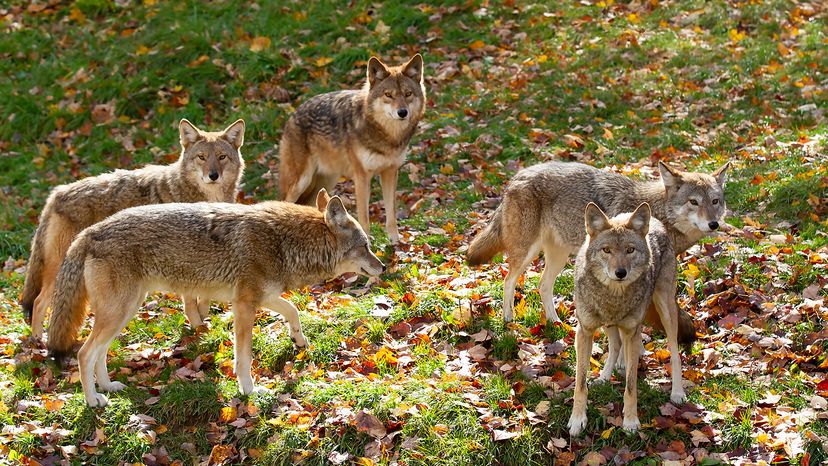
We'd call these coyotes unintimidated by human presence. Jim Cumming / Shutterstock

If you have ever wondered, "What is a group of coyotes called," the answer is: a pack. A group of coyotes is most commonly called a pack.

Unlike wolves, coyote packs are usually small and built around close family groups. Understanding how they live helps explain why the word pack fits their behavior so well.

Advertisement

Do Coyotes Always Live in Packs?

Coyotes, scientifically known as Canis latrans, do not always travel in large packs. Most of the time, they form small groups centered on a breeding female and her mate.

In early spring, pups are born in a coyote den. Both parents care for the pups, and other pack members—often older siblings—may help with feeding and protection. These dominant animals defend their territory together, especially during breeding season.

Advertisement

In urban areas, coyotes often have smaller home ranges than rural coyotes. Range expansion across Canada, New England, and even Central America has shown how adaptable the species can be.

How Big Is a Typical Coyote Pack?

A pack of coyotes is generally a family, consisting of a breeding pair and their offspring. The pack shares a home range, which can stretch across miles of wild habitat or suburban green space.

Coyotes rarely form large colonies like colonies of ants. They also do not gather in herds like deer. Their structure resembles domestic dogs more than it does a skulk of foxes, a bask of crocodiles, or a crash of rhinoceroses (examples of colorful collective nouns in the animal world).

Advertisement

A pack allows coyotes to hunt more effectively. While a single coyote can catch rabbits, mice, voles, and squirrels, small groups can target larger prey such as deer.

What Do Coyotes Eat and Hunt?

Coyotes are opportunistic predators. Their diet includes:

  • Small mammals such as rodents, mice, and voles
  • Birds, snakes, and rabbits
  • Carrion left by other predators
  • Plant matter such as fruit

They sometimes compete with cougars and wolves in parts of the west. Unlike wolves, however, coyotes adapt easily to human presence and often avoid areas with heavy activity during the day, becoming more active at night.

Advertisement

Their feeding behavior shifts based on season, habitat, and prey availability.

Advertisement

Why Do Coyotes Howl Together?

One of the most iconic sound experiences in North America is a pack of coyotes howling at night. That high pitched chorus echoes across fields and forests in Canada, Mexico, and the eastern United States.

Howling helps pack members communicate location and reinforce territory boundaries. It can also warn other predators to stay away.

Advertisement

When you hear multiple voices rising and falling together, you are likely listening to a family group rather than a random gathering. Pups playing near dens may add short yips to the chorus, creating the layered sound many people recognize instantly.

How Do Eastern and Western Coyotes Differ?

Western coyotes are generally smaller and occupy open habitats across the west. Eastern coyotes, found in New England and other eastern states, often have some wolf ancestry due to historic hybridization during range expansion.

That genetic mixing can make eastern coyotes larger and more capable of taking down deer. Still, both types maintain similar pack behavior and breeding patterns.

Advertisement

Across their vast range, coyotes show remarkable flexibility. Whether in wild grasslands or suburban neighborhoods, they form packs to raise pups, defend territory, and hunt efficiently.

We created this article in conjunction with AI technology, then made sure it was fact-checked and edited by a HowStuffWorks editor.

Advertisement

Advertisement

Loading...