
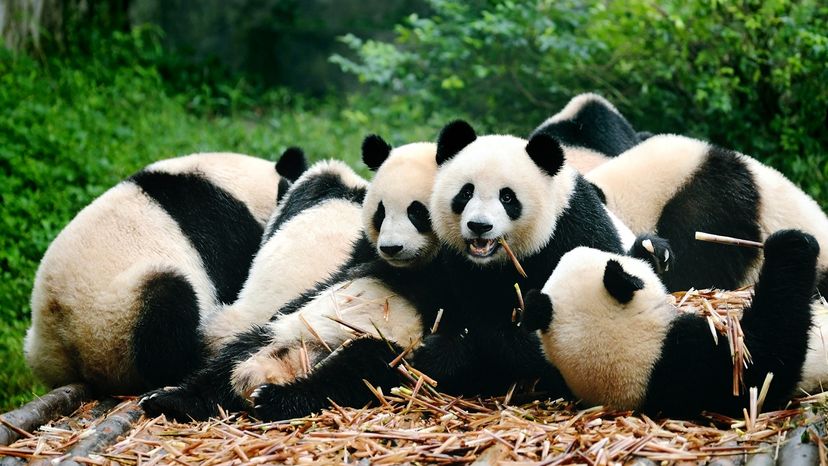
A panda munching bamboo is one of nature's most iconic sights. But what if you saw more than one? You might wonder, what is a group of pandas called?
Turns out, the answer is as strange as it is charming.
Advertisement
A panda munching bamboo is one of nature's most iconic sights. But what if you saw more than one? You might wonder, what is a group of pandas called?
Turns out, the answer is as strange as it is charming.
Advertisement
Yes, really. A group of pandas is commonly called an embarrassment.
While that may sound like the punchline to a joke, it's a genuine collective noun listed in several zoological and literary references. You might have heard of a murder of crows or a pod of dolphins—same idea.
Advertisement
Some sources also refer to a group of pandas as a cupboard, though that's far less common. Still, if you ever spot a bunch of giant pandas lounging around together (a rare sight in the wild), you can tell your friends you witnessed an embarrassment of pandas.
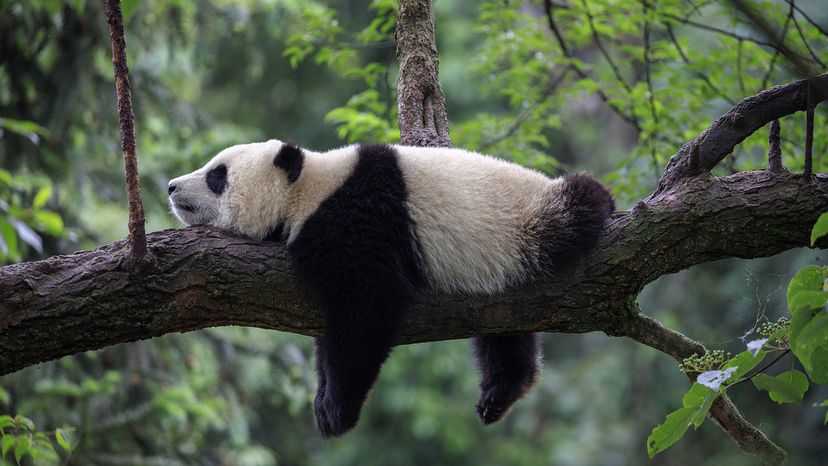
Pandas are famously clumsy and often appear lazy, which might explain the reasoning behind the term.
They're also solitary animals by nature. The majority of their time is spent alone, and they typically only interact during the breeding season.
Advertisement
Seeing them together is rare in the wild, which may contribute to the term's playful absurdity. There's no scientific origin for the word—just good old-fashioned English whimsy, much like a parliament of owls or an unkindness of ravens.
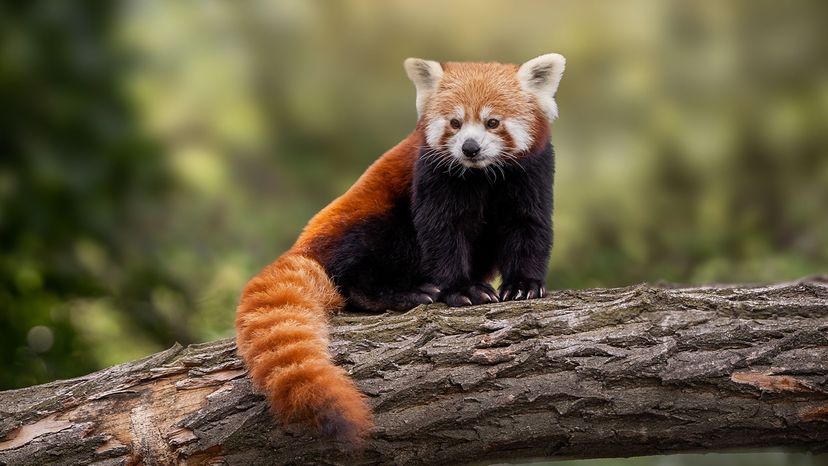
Red pandas, which are not closely related to giant pandas, don’t share the same collective noun: They're called a pack. More commonly, these arboreal animals are solitary, spending most of their time alone in trees.
They’re not bears either. Unlike the large black-and-white giant pandas. Red pandas belong to their own unique family and are more closely related to raccoons than to bears like the giant panda.
Advertisement
The English language is full of quirky terms for groups of animals. You might be familiar with:
These words aren’t scientific; they’re largely poetic, dating back to hunting and noble traditions in medieval Europe. Over time, they stuck around because, well, they're just plain fun.
Advertisement
Still, the phrase makes a delightful connection between language and wildlife, reminding us that sometimes, the world of words is just as strange as nature itself.
We created this article in conjunction with AI technology, then made sure it was fact-checked and edited by a HowStuffWorks editor.
Advertisement
Please copy/paste the following text to properly cite this HowStuffWorks.com article:
Advertisement