Studying personality in animals seems silly to some; indeed, scientists wishing to pursue the subject have had to overcome skepticism in the academic world [source: Dye]. Their attempts seem to be working, as the amount of research on animal personality has been steadily growing since the 1990s.
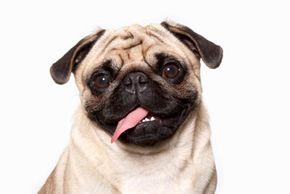
For instance, Dr. Samuel Gosling has been fighting to expand research in the area of animal personality and gained media attention for his research in dog personality. Because dogs cannot tell us about their feelings and behavior, Gosling compared how observers interpret personality in other humans and in dogs. In one test, observers unfamiliar with the people and the dogs judged them based on their behavior performing various activities. In the other test within the study, friends familiar with the people and the dogs assessed their personalities. The participants reported if they found the people and the dogs extroverted, agreeable, neurotic and open. Gosling found that these judgments were consistent for the humans and the dogs [Source: Gosling]. This and other methods have led Gosling and others to believe not only that we can study personality in animals, but that dogs do in fact have distinct personalities.
OK, so dogs probably possess personality, but what about other, less domesticated animals? After all, humans spend time with their dogs and deliberately manipulate dog breeding. Does Mother Nature allow personality to thrive in wild animals?
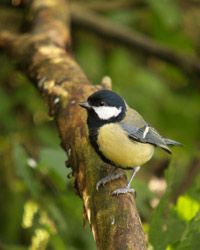
Scientists in the Netherlands studied a species of wild birds, called great tits, to find out. The studies incorporated both lab tests and observations of the birds in their natural habitat. Their studies found distinct and varied personalities among the species [source: Dingemanse]. Some birds showed aggressive or adventurous behavior, while others were shy and timid [source: Dingemanse]. The studies also found evidence that personality is genetically inherited [source: Dingemanse]. Controlling how the birds bred, the scientists were able to amplify certain characteristics. One scientist behind the studies reported that more than half of the differences in traits came from genetic inheritance [source: Zimmer]. Curiously, natural selection had not weeded out one personality or the other, but kept the birds significantly diverse.
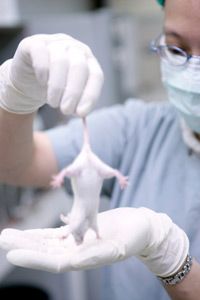
Other studies have found personality traits in various other species, such as hyenas, ferrets, primates, spiders and even fish. As the research grows, the question might no longer be whether animals have personalities, but rather if there is any species that doesn't. However, skeptics question the reliability of using human personality terms on animals [source: Zimmer]. Does the idea of "shyness" mean the same thing when it's applied to a human as when it's applied to an animal?
In the end, these studies may have some practical benefits. On the next page, we'll discuss those benefits.