
When Polar Bears Attack
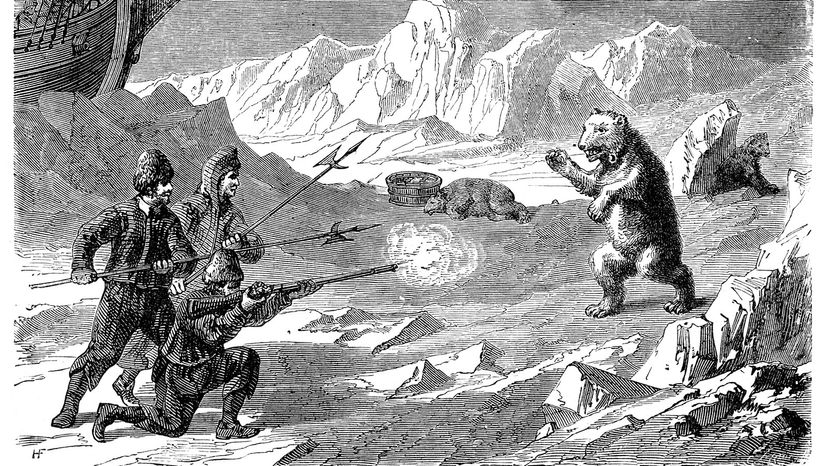
Modern zoos around the world keep polar bears, often trying to emulate their natural habitats as much as possible. A zoo is pretty much the only place where it's safe for a human to get anywhere near a polar bear.
With sea ice melting, polar bears are frequently forced to move onto land in the warmer months. More polar bears on land – looking for sustenance where their natural prey is absent – means more interactions with humans, and more attacks. Polar bears don't seek out confrontations, but if they're really hungry or feel threatened, they'll kill – and eat – a human without a second thought.
Advertisement
If you're traveling in polar bear territory, you should be mentally prepared for a potential encounter. The best way to avoid these animals is to keep attractants, like garbage, food, animal remains, soap, propane canisters – really, anything that smells – tightly sealed and in a place where no creatures can detect them. This bit of advice alone can keep you from coming face to face with a hungry (read: potentially aggressive) bear [source: BearSmart].
If you do stumble into a polar bear, don't panic. Stop moving. Assess the situation. Is the animal curious? Is it behaving in a predatory way? Or is it stressed and defensive? If the animal doesn't know you're there or seems unconcerned with your presence, simply slowly back away.
If the bear approaches, it may be trying to figure out what sort of being you are, exactly. And that's when you should raise your arms, begin speaking in calm, low tones, all for the purpose of making it clear to the bear that you're a human and not some sort of tasty two-legged prey. If all else fails, you may have to deploy bear spray to halt a bear attack. This potent spray is statistically proven to work better than firearms in many cases [source: Outside].
Still, attacks are extremely rare, and they're always by a bear that's either starving or provoked [source: Polar Bears International]. The town that hosts the most polar bears in the world, Churchill, Manitoba, has had two people killed by polar bears in 300 years [source: Polar Bears International]. The first attack took place after several teenagers came upon a bear and started throwing rocks at it. The second attack was on a man who had meat in his pockets and happened to come upon a hungry bear.
Throughout the animal's range – (including Canada, U.S., Russia, Norway, Russia and Greenland), researchers documented just 73 attacks by non-captive polar bears from 1870 to 2014. Of those attacks, 20 proved fatal [source: USGS]. Fatal encounters in North America are much more likely to involve black or brown bears, which are more numerous and have a much wider range, and thus, are more likely to encounter humans [source: KTUU].