
Walrus: History, Protection and Tradition
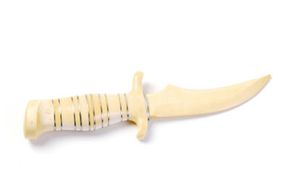
Though walruses have few natural predators, man has hunted them since the ninth century. Hunters have stalked them for their oil, ivory and skin. Because of this, walrus populations have dropped to extremely low levels and then recovered at several points in human history.
Walrus oil -- created by boiling walrus blubber at high temperatures -- was greedily sought for lamps, soap and as a machine lubricant between 1860 and 1880. During that period, approximately 10,000 walruses were killed a year in the eastern Arctic alone [source: Lanken]. After the most recent depletion, however, walrus hunting has largely been restricted in Canada, Russia and the U.S. Only native populations who rely on the walrus as a source of food are permitted to hunt the animal.
Advertisement
In the United States, the Marine Mammal Protection Act of 1972 not only protects the walrus from hunters but also prohibits the trade of walrus ivory. Only ivory that predates the law or has been carved by an Alaska native can be legally traded [source: Burns]. In addition, although the walrus is not endangered, it is listed under Article III of CITES, the Convention on International Trade in Endangered Species. This status gives it some protection by placing restrictions on the global trade of walruses and walrus products.
After significant fluctuations in walrus populations over the last several hundred years, current populations appear to be stable and may even be thriving. Although some illegal ivory trade is inevitable and the effects of global warming remain to be seen, walruses are enjoying a welcome stability in their total numbers.
For more information and some interesting videos of walruses, don't miss the links on the following page.
Related HowStuffWorks Articles
- How do walruses sleep without drowning?
- Walrus Quiz
- Marine Mammal Quiz
- How Sharks Work
- How Shark Attacks Work
- How Global Warming Works
More Great Links
Sources:
- Burns, John J. "Walrus." Alaska Department of Fish and Game. 1994. http://www.adfg.state.ak.us/pubs/notebook/marine/walrus.php
- Lanken, Dane. "Grace under water: A thick-skinned beast reveals its inner beauty." Canadian Geographic. 122.2 (March 2002): 48 (6). (Feb. 2, 2008)http://find.galegroup.com/ips/start.do?prodId=IPS
- Mathews, Richard. "The summer-long bachelor party on Round Island." Smithsonian. 14 (Oct. 1983): 68 (6) (Feb. 2, 2008)http://find.galegroup.com/ips/start.do?prodId=IPS.
- Murdoch, William J. "Principles of Mammalian Production." University of Wyoming.http://www.uwyo.edu/wjm/Repro/implant.htm
- Rhett A. Butler. "Global warming could doom the walrus." April 14, 2006.http://news.mongabay.com/2006/0413-walrus.html
- Robichaud, Heidi. "Laws and regulations governing the sale of ivory."http://gustavus.com/heidi/laws.html
- National Park Service. "Subsistence and Walrus Hunting."http://www.nps.gov/akso/ParkWise/Students/ReferenceLibrary/BELA/SubsistenceWalrusHunting.htm
- Vlessides, Michael. "In Search of the Tooth Walker -- In the frigid Arctic, researchers attempt to assemble the puzzle that is the Atlantic walrus." International Wildlife. (Nov-Dec 2000) (Feb. 2, 2008)http://find.galegroup.com/ips/start.do?prodId=IPS.
- "Walrus." SeaWorld/Busch Gardens Animal Information Databasehttp://www.seaworld.org/infobooks/Walrus/home.html