late cretaceous dinosaurs library


A period of great transformation, the Late Cretaceous Period is when the dinosaurs disappeared from the earth. Learn more about the Late Cretaceous dinosaurs that existed during this era, such as the Tyrannosaurus, Gallimimus, and Brachylophosaurus.
Featured Article:  Panoplosaurus

Panoplosaurus is known only from two partial skeletons, one of which preserves some of the armor the way it was in life. This skeleton shows that Panoplosaurus was unusual among nodosaurids because it did not have spikes on the sides of its neck. See more »

Saltasaurus

Saltasaurus

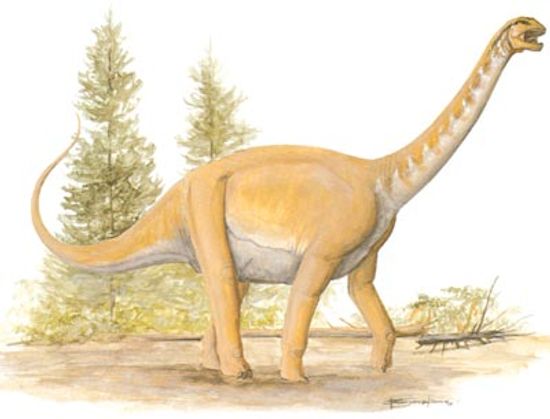
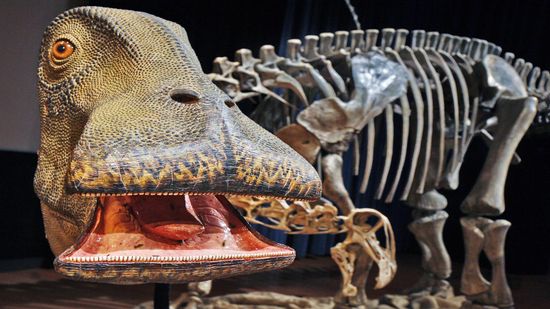
From Salta in Argentina, Saltasaurus was described from several incomplete skeletons, none of which were found with a skull. This medium-size sauropod was dwarfed by its giant relative Antarctosaurus, also from South America.

See more »
Saurolophus

Saurolophus

Saurolophus ("ridged reptile") was a hadrosaurid. It had a large bony spike pointing back over the top of its head between its eyes. Learn more about the Saurolophus and other Late Cretaceous dinosaurs.

See more »
Sauroornithoides

Sauroornithoides

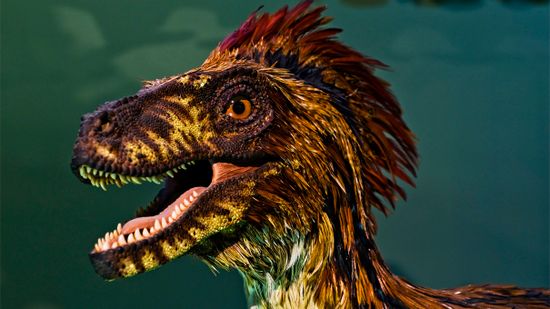
Discovered during an expedition by the American Museum of Natural History, Saurornithoides is an example of a birdlike dinosaur. It looked much like a bird. It was found close to where two other birdlike dinosaurs (Velociraptor and Oviraptor) were also discovered.

See more »
Segnosaurus

Segnosaurus

Segnosaurus galbinensis, or "slow lizard from Galbin" (a region of the Gobi Desert), was first described by Mongolian paleontologist Altangerel Perle in 1979. It was an unusual saurischian that he classified in its own family, the Segnosauridae.

See more »
Shamosaurus

Shamosaurus

Shamosaurus is one of the oldest known ankylosaurs. It lived about the same time as the nodosaur Sauropelta. Learn more about the Shamosaurus and other Late Cretaceous dinosaurs.

See more »
Shanshanosaurus

Shanshanosaurus

The paleontological expeditions into the Turpan Basin in 1964-1966 turned up several interesting and unusual dinosaurs, ilncuding the Shanshanosaurus huoyanshanensis. Learn more about the Shanshanosaurus and other Late Cretaceous dinosaurs.

See more »
Shantungosaurus

Shantungosaurus

Shantungosaurus may have been the largest hadrosaur. It is larger than some of the smaller sauropods. Named and described in 1973, Shantungosaurus is known from many disarticulated (not joined) bones from the Shandong Province, People's Republic of China.

See more »
Talarurus

Talarurus

The Talarurus is one of the better-known ankylosaurs from Mongolia. Several partial skeletons were excavated by Soviet paleontologists during the 1950s. One of these skeletons is mounted at the Paleontological Institute in Moscow.

See more »
Tarchia

Tarchia

This ankylosaur is known from two species. Tarchia giganteus is known from a complete skull and a partial skeleton. But, except for the skull, little of the material has been described. Learn more about the Tarchia and other Late Cretaceous dinosaurs.

See more »
Thescelosaurus

Thescelosaurus

Thescelosaurus was one of the last hypsilopbodontid dinosaurs. It is known from the end of the Late Cretaceous of Montana in the United States, and Alberta and Saskatchewan in Canada. Learn more about the Thescelosaurus.

See more »
Triceratops

Triceratops

Triceratops is one of the most spectacular and well known of all dinosaurs. It lived to the end of the Cretaceous. Triceratops was the largest of the ceratopsians. Learn more about the Triceratops and other Late Cretaceous dinosaurs.

See more »
Troodon

Troodon

Troodon was described in 1856 by Joseph Leidy on the basis of a single small tooth. It was one of the first North American dinosaurs described. Learn more about the Troodon and other Late Cretaceous dinosaurs.

See more »
Tryannosaurus Rex Behavior

Tryannosaurus Rex Behavior

On a typical day near the end of the Cretaceous Period, more than 65 million years ago, a bloody battle rages along the bank of a shallow river in what is now South Dakota. Learn all about tyrannosaurus Rex behavior.

See more »
Tylocephale

Tylocephale

Tylocephale is one of a group of new dome-headed dinosaurs discovered by the Joint Polish-Mongolian Paleontological Expeditions to the Gobi Desert. Learn more about the Tylocephale and other Late Cretaceous dinosaurs.

See more »
Tyrannosaurus

Tyrannosaurus

Even today, 90 years after it was discovered by Barnum Brown in the Hell Creek Formation of Montana, Tyrannosaurus rex remains the largest known predator to have walked the earth. Learn about Tyrannosaurus, Late Cretaceous dinosaurs and dinosaurs of all eras.

See more »

Anchiceratops

Anchiceratops was discovered along the Red Deer River in Alberta in 1912. Learn more about the Anchiceratops and Late Cretaceous Dinosaurs.

See more »

Ankylosaurus

Next to Tyrannosaurus and Triceratops, Ankylosaurus is one of the best-known dinosaurs. Learn more about the Ankylosaurus, Late Cretaceous dinosaurs and dinosaurs of all eras.

See more »

Anserimimus

The ornithomimid, Anserimimus, has the name "goose mimic." Learn more about the Anserimimus, Late Cretaceous dinosaurs and dinosaurs of all eras.

See more »

Argyrosaurus

In 1893, British paleontologist Richard Lydekker published the first description of sauropod dinosaurs from South America that had been unearthed in Patagonia, Argentina. One of these was the Argyrosaurus. Learn more about this Late Cretaceous dinosaur.

See more »

Avaceratops

Avaceratops lammersi was a small ceratopsid known from a single skeleton found in the Judith River Formation of Montana in 1981. Learn more about the Avaceratops and other Late Cretaceous dinosaurs.

See more »