Domestic Rabbits

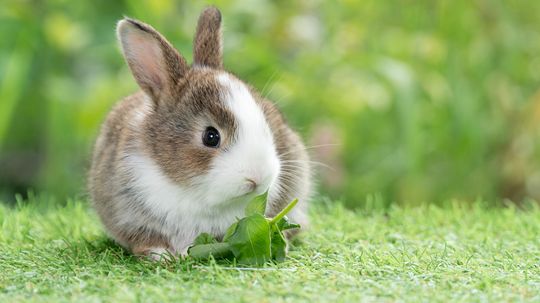
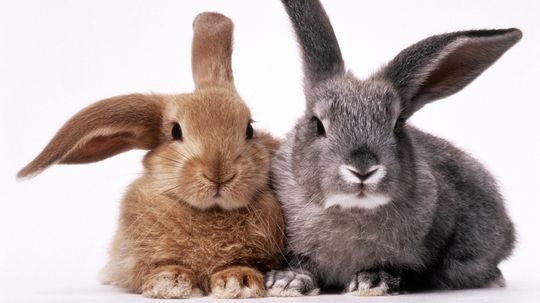
There are more than 60 varieties of domestic rabbits, all descended from the wild European rabbit. They are raised for their meat and fur, for use as laboratory animals, and for pets. They vary greatly in color, and may weigh from 3 to 16 pounds (1.4 to 7.3 kg). Some have small, erect ears, others have long, hanging ears.

Rabbit pelts are used for making fur garments. The fur, known as coney, may be dyed and treated in various ways to imitate more expensive furs. Some grades of rabbit fur are used to make felt for hats. The long fur of the Angora rabbit can be woven. The breeds best suited to producing fur and meat are New Zealand, Californian, American, Beveren, Champagne d'Argent, Chinchilla, and Flemish Giant.

How Did Breeds of Rabbits Develop?

People sometimes breed (mate) animals, hoping to develop certain traits (features or characteristics) in the offspring of those animals. When animals are bred to have special traits, the offspring that result are often somewhat different than the animals from which they were bred.

People first bred rabbits for their meat and pelts (skins). Eventually rabbits were also bred for show, and breeders then began to focus on such traits as the quality and color of the animal’s fur. Some breeders bred their rabbits to have such traits as long or short hair. Eventually, rabbit breeds—that is, groups of animals that had the same type of ancestors—were developed.

Holland Lops were bred from several different rabbit breeds—Netherland Dwarfs, French Lops, and English Lops. Holland Lops look a little like each of these breeds of rabbits.

Who Is the “King” of the Rabbits?

One rabbit has fur so beautiful, it was named Rex, the Latin word for “king.”

Most breeds of rabbit have beautiful, soft fur, but the Rex rabbit’s fur is exceptionally soft. It is extra fine and very short, so this rabbit looks and feels like velvet. In rabbit shows, Rex rabbits are judged on their fur rather than on other physical qualities.

Nevertheless, Rex rabbits have many other good qualities. A Rex is a fairly large rabbit and is less jumpy than smaller rabbits, so a Rex can be easier to handle. Rex rabbits are also very intelligent and playful.

Mini Rex rabbits, which are smaller versions of standard Rex rabbits, are sometimes called Velveteen rabbits. They are named for the cuddly rabbit in the storybook by Margery Williams, The Velveteen Rabbit.

Who Is the New Kid on the Block?

One newer breed of rabbit is called the Lionhead. Lionhead rabbits have a special, unforgettable feature. Both male and female Lionheads have a mane of “wool.” (Very long fur on rabbits is known as wool.) This mane encircles the rabbit’s head and makes the rabbit look like a small lion.

Lionheads have been a recognized breed in the United Kingdom since 2002. In the United States, breeders began showing the Lionhead in 2004. According to the associations that regulate rabbit breeds, Lionhead rabbits should have ears that stand up straight. (There is, however, a lop-eared version of a Lionhead that is not yet recognized by the rabbit associations.)

Lionheads are friendly and easy to train and care for. Since most of their fur is not wool, they do not need as much grooming as other wool breeds, such as Angoras.

Which Rabbit Is an Eye-Catcher?

The Blanc de Hotot (hoh toh) has one truly noticeable feature—its eyes.

This breed of rabbit has a round body, a round head, and short ears. Its fur is white. This white fur allows the dark fur that encircles the eye of the Hotot to really stand out. The fur around the eye is called an eyeband.

The Blanc de Hotot (white of Hotot) was developed in the early 1900’s in Hotot-en-Auge, in France. A dwarf version of the Hotot breed developed in Germany in the late 1970’s. The full-sized Hotot weighs between 8 to 11 pounds (3.6 to 5 kilograms). The dwarf version weighs under 3 pounds (1.4 kilograms).

Which Is the Tiniest Rabbit?

There are miniature versions of many rabbit breeds. For example, Holland Lops have smaller relatives known as Mini Lops, and there is a smaller version of a Rex rabbit called a Mini Rex.

Some breeds, however, are small by nature. For example, Netherland Dwarf rabbits remain very small throughout their lives. Adult Netherland Dwarfs usually weigh less than 2 pounds (0.9 kilogram). These tiny, short-haired rabbits often look like furry little balls. Netherland Dwarfs come in many colors, ranging from white to deepest black.

Netherland Dwarfs are extremely cute—but they can be cranky. This breed is sometimes prone to biting. That is why some breeders advise people who are considering a rabbit for a pet to admire the Netherland Dwarfs—but find some other, less aggressive rabbit for a pet.

Which Is the Biggest Rabbit of All?

Not all rabbits are cute and tiny. Some are cute and rather large.

Angoras (a type of rabbit with long fur), for example, are usually medium- to large-sized, compared with other rabbits. But Giant Angoras, all of which are white, can weigh in at 10 pounds (4.5 kilograms) or more when fully grown. Mature French Lops also weigh about 10 pounds.

The Giant Chinchilla, a breed of rabbit that has a reputation as a sweet-tempered pet, weighs between 12 and 16 pounds (5.4 and 7.3 kilograms) fully grown, as does a rabbit breed known as the Giant Papillon.

Flemish Giants, however, are the breed of rabbit that can grow the largest. Long and heavy, mature Flemish Giants can weigh up to 17 pounds (8 kilograms).

Which Rabbits Live in Warrens?

Cottontails tend to live alone in a form or a burrow. But European rabbits like company. They prefer to live with their family in a warren.

A warren is a series of underground nests, or burrows. They are connected by narrow tunnels that are only about 6 inches (15 centimeters) wide. Some tunnels run as deep as 10 feet (3 meters) below the ground. The female rabbits do most of the digging.

A warren usually has several entrances and exits. Mounds of dirt mark the main openings. Smaller openings, called bolt holes, are big enough for a rabbit to leap into. But they are too small for most enemies to use.

As the rabbit family multiplies, the warren grows bigger. The rabbits add more tunnels and nests.

What Are Domestic Rabbits?

Domestic rabbits are European rabbits that do not live in the wild. Instead, they are raised as tame animals. Many domestic rabbits are kept as pets.

Like dogs and cats, domestic rabbits come in many colors, shapes, and sizes. Each different type of domestic rabbit is called a breed. Many breeds of domestic rabbits are often bigger than wild rabbits. The white Flemish giant is the largest domestic rabbit. It can weigh up to 17 pounds (8 kilograms). Compare that with the wild European rabbit that weighs only 5 pounds (2.3 kilograms).

Domestic rabbits also multiply faster than wild rabbits. Unlike wild rabbits, domestic rabbits usually live indoors. They don’t have to wait for warm weather to raise a new litter of kits.

What Is a Good Rabbit Habitat?

A habitat is a place where an animal lives, which contains everything the animal needs. A pet has a habitat of sorts, provided by its owner. A pet rabbit needs a hutch, or rabbit cage, in an area that provides shelter against wind, rain, cold drafts, and hot sun. Rabbits need to remain out of direct sunlight or temperatures above 80 °F (27 °C) at all times.

The cage should be long enough for the rabbit to stretch out comfortably and tall enough for the rabbit to sit up. Larger would be better. If a rabbit must be kept in a smaller cage, it should be allowed daily playtime outside its cage.

Line the bottom of your rabbit’s cage with enough bedding of fresh hay or straw to allow your pet to dig. A litter box is a good idea if your pet has been taught to use it. The litter absorbs some of the ammonia from your pet’s urine and helps to keep its cage cleaner. If you provide your pet with a litter box, fill the box with a safe litter made of paper or alfalfa pellets.

How Do You Keep the Habitat Healthful?

To keep your rabbit’s home comfortable and healthful, keep it ventilated, clean, shady, and not too hot or cold.

For your pet’s comfort and health, the bedding at the bottom of its cage should be changed every other day or so, depending on how dirty the litter gets. If your pet is litter-trained, you may be able to keep bedding for up to a week.

However, you must then change the litter in the litter box every day or two.

For feeding, you will need a small dog bowl or 4-inch (10-centimeter) crock in the habitat. Many owners attach the feeding bowl to the side of the cage. Some owners also suggest using a hayrack to keep the rabbit’s hay clean and ready to eat.

A slightly larger crock can serve as a water bowl. Many owners, however, prefer to use a feeder bottle—a bottle that hangs from the side of the cage and that dispenses water.

How Should You Pick Up a Rabbit?

Rabbits are squirmy creatures, but if your pet feels safe, it will relax contentedly in your arms.

To pick up your rabbit, find a spot next to its habitat where you can sit or kneel comfortably. Place one hand under your rabbit’s rump, or hindquarters, to support it. With the other hand, grab the rabbit quickly and gently by the scruff, or back of its neck. Lift up your rabbit with both hands so it feels supported and balanced.

Now place your pet against your body, with all four of its feet resting on your chest or lap. Keep one hand under its rump so that your pet does not dangle dangerously. Take the other hand off the scruff of the neck and cover your rabbit’s ears—if the ears wobble, so will the bunny.

If your rabbit is very shy, ask an adult to wrap it in a towel or baby blanket before handing it to you. This will make your pet will feel extra cozy and secure.

Do Rabbits Bite?

Rabbits do not usually bite. They will, however, chew on food, toys, wood, and anything else that they think is food. So if you stick your finger into your rabbit’s cage, it might nip at your finger. And, if that finger is sweet-smelling and sticky, your rabbit might try to munch it.

Sometimes, rabbits will also nibble on clothes. If you tell your rabbit “no” and give your pet something that is okay to chew on, it should stop nibbling on you.

If your rabbit becomes frightened or annoyed, it will try to run away or hide. If it cannot get away, a scared or angry rabbit will lower its head, charge, and try to scratch with its claws. Most rabbits only bite as a last resort.

What If Your Rabbit Refuses to Eat?

Rabbits, especially Holland Lops, can be picky eaters. Before you assume something is wrong with your pet, make sure your rabbit’s water bottle works properly. Then check to see that the water in it is cool and clean.

If your rabbit is drinking but not eating, make sure that its food is appetizing. Clean out its feeder to make sure it is free of dust and mold. Also make sure the food pellets are fresh and dry.

If your pet still does not eat, remove all food pellets for a day and offer your rabbit plenty of hay and water. Your rabbit may have a hairball in its stomach. Rabbits get hairballs from licking their fur when grooming and then swallowing that fur. A fur ball can cause a rabbit to refuse food and to have a difficult time eliminating solid wastes. Feeding your rabbit a lot of fresh hay and water can help the rabbit to pass this blockage.

If your rabbit refuses food for 48 hours, call a veterinarian. A serious blockage or other illness may require care right away.

Where Can You Get a Pet Rabbit?

Many rabbit owners get their animals from shelters or rescue groups. These organizations save unwanted animals from being killed. The organizations often charge very little money and sometimes include medical treatment and spaying or neutering in the price.

Reliable breeders are another source for breeds of pet rabbits, including Holland Lops. Breeders can offer advice on caring for a rabbit.

Some 4-H programs, Future Farmers of America (FFA) organizations, and Scout troops also sell rabbits. Often, these sellers will know all about their animals and can help you make an informed choice. They also may charge less than a breeder would.

You can also try a pet store—but make sure the store’s owners know and care about rabbits. Choose a store with experience in dealing with rabbits.

What Is a Rabbit Show Like?

At rabbit shows, animals are judged on which is the best of a certain breed of rabbits. Each animal is judged according to standards set for its breed. In the United States and Canada, the American Rabbit Breeders Association (ARBA) sponsors many of these shows.

How can you find out if your pet rabbit is a prize winner? You can study ARBA standards, train your rabbit, enter a contest, and find out. The ARBA has a youth division in which people younger than 19 years of age compete. Pet rabbits are also judged at 4-H competitions.

What Are Some Common Signs of Illness in Rabbits?

Rabbits are usually fairly healthy. But, even healthy rabbits are prone to a few kinds of problems. Rabbits often cut or scratch themselves. They also get hairballs from grooming their fur. And they are likely at some point to get diarrhea, colds, and bacterial infections. Lop-eared rabbits are especially likely to get ear infections.

Minor rabbit illnesses are easy to treat. Antibiotic ointment protects cuts and scratches. Hay and water, as well as fresh papaya or pineapple, can help rabbits to pass hairballs. Whole wheat bread, dry oatmeal, and hay can cure mild diarrhea caused by too many fresh fruits and vegetables in your rabbit’s diet. Your vet can give you medicine to treat colds and minor infections your rabbit might catch.

If any illness or condition bothers your rabbit for more than a day, call your vet. Long-lasting illnesses can kill your pet.

What Routine Veterinary Care Is Needed?

Even healthy rabbits can benefit from a visit to the veterinarian now and then. All rabbits should get regular checkups, including dental checkups, to make sure they are well. Your vet can tell you how often these routine checkups should happen. At each checkup, the vet can check for parasites and look for other problems you may not have noticed.

In addition, pet rabbits should be spayed or neutered. Spaying (for females) or neutering (for males) ensures that your rabbit will not produce offspring that you cannot take care of. Spay or neuter also helps keep pet rabbits calm, friendly, and less likely to run away.

Experienced vets are a good source of advice about your pet. They can help you adjust your rabbit’s diet or its living space to keep it active, healthy, and happy in its home with you.

What Are Your Responsibilities as an Owner?

Holland Lops and other domestic rabbits are not endangered (in danger of dying out). Nevertheless, pet rabbits do need to be cared for in a loving, responsible way. Before you buy a rabbit, think about the daily and weekly care it will require. Do not forget that the cute little bunny you see in the pet store will grow up to be a larger rabbit that needs to run, jump, and play.

Remember that rabbits do not know which items in a home are off-limits. It is up to you to keep them safe from dangers and to keep valuable items out of their reach. And, when outside, your rabbit must be in an enclosure that prevents it from getting lost or being hurt by wild animals.

Also, remember that not all pet animals get along with each other right away. Keep other pets—even other rabbits—away from a new pet rabbit until you are sure they will all get along.

Rabbit Fun Facts

Domestic rabbits are born blind and hairless.

In the wild, European rabbits will often live together in large colonies, sharing a large system of underground burrows, called warrens.

A pika is a small furry relative of rabbits and hares. The pika, however, looks more like a mouse or guinea pig than a rabbit.

The Latin name for the Iberian Peninsula—where Spain and Portugal are located—is named for a term in the ancient language of Phoenician that meant “rabbit land.”

The children of two United States presidents had pet rabbits in the White House—Abraham Lincoln and John Kennedy.

In Japan, and in other Eastern cultures, people do not imagine a “man in the moon.” Instead, they look for a “rabbit in the moon!”

How Small Is a Pygmy Rabbit?

The pygmy (PIHG mee) rabbit is not a cottontail. It’s not a European rabbit either. But it is a small kind of rabbit. It grows only about 11 inches (28 centimeters) long. It scampers more than it hops.

Everything about a pygmy rabbit is small. It weighs only about 1 pound (1/2 kilogram). Its ears are small, and its tail is nearly hidden. Even its hind legs are short. That’s why this rabbit scampers more than it hops.

The pygmy rabbit can be found in the deserts of the western United States. The pygmy rabbit is the only North American rabbit that digs its own burrows. It makes its home where there is tall sagebrush. The sagebrush serves as food and also protects the rabbit from its enemies.

Which Rabbits Live Near Volcanoes?

Volcano rabbits do, of course! Volcano rabbits live on and near the slopes of two volcanoes in central Mexico. The animals roam the slopes of these two volcanoes, about 2 miles (3.2 kilometers) above sea level.

The volcano rabbit is a true rabbit, although it looks more like a guinea pig than a rabbit. It has much smaller ears than cottontails and European rabbits. The volcano rabbit’s tail is not even visible.

To see a volcano rabbit, you would have to climb one of the volcanoes in Mexico. This rabbit lives nowhere else in the world. It comes out at night to eat minty plants, its favorite food. During the morning, you may see it sunbathing in the grass.

Do Snowshoe Hares Wear Snowshoes?

No, but the inventor of snowshoes probably got the idea from a snowshoe hare like this one. Its two hind feet look like snowshoes. They are very large and furry. They help the hare hop across deep snow without sinking. That’s important because the snowshoe hare lives where it snows a lot. It makes its home in the forests and swamps of Canada and the northern United States.

The snowshoe hare is also called the varying hare. Its looks vary, or change, depending on the season. In winter, the hare has a white fur coat. But it sheds that fur and grows a brown coat for the summer. The color change protects the hare from enemies. In winter, the hare blends in with the snow. In summer, it blends in with the soil and grass.

Who Has Fun When It’s Freezing?

The Arctic hare loves a good, harsh winter. The animal makes its home in the coldest parts of Canada and Greenland. Winter temperatures there average about -20 ºF (-29 ºC).

Arctic hares are well prepared for freezing weather. Their thick fur coat keeps them warm. They have shorter ears than other hares, too. That helps them to save body heat.

Like snowshoe hares, Arctic hares have a layer of stiff fur on the bottoms of their feet. The fur keeps the hare from sinking into the snow as it hops. The feet have sharp claws that dig into hard snow for twigs and willow roots.

Arctic hares tend to rest in the hollow spaces under large rocks. In a snowstorm, these hares dig tunnels in the snow for protection.

What Does a Hare Do When It’s Jinking?

Jinking is a trick that a hare often uses to escape from enemies. It involves hopping in a zigzag pattern to avoid being caught.

Hares can move very fast. A jack rabbit, for example, can leap about 45 miles (72 kilometers) an hour. Some of its enemies can run even faster, however. When a hare is about to be caught, it makes a sharp left or right turn at full speed. The hare’s enemy keeps running straight ahead.

Who Is “Mad As a March Hare”?

Have you ever heard of someone being “mad as a March hare”? It means that the person is acting completely crazy. The expression comes from the way that European brown hares behave in March, or the early spring.

March is the start of the mating season for European brown hares. The male hares begin to leap, twist, tumble, and fight during that time. They are competing for female hares. A female may even fight with a male to see how tough he is. The male that acts the “maddest” wins the mate.

A female European brown hare does a very strange thing. She leaves her babies alone in order to protect them. The female hare can grow to 27 inches (69 centimeters) long. Because of her large size, she can be spotted easily by a fox or other enemy. So, this female hare lets her babies hide in the grass by themselves, while she keeps watch from a distance.

Are These Animals in Danger?

Lagomorphs are always in danger of losing their lives. They have many enemies in nature. Foxes, snakes, hawks, weasels, and owls all hunt rabbits, hares, and pikas.

The greatest enemies for most lagomorphs, however, are people. Every year, hunters kill millions of rabbits for sport, food, or fur. Farmers also kill many rabbits to stop them from destroying crops. And many rabbits die because cars run them over.

The lagomorphs that are in the most danger, however, are the ones that live in very special habitats. For example, the bushman rabbit of South Africa is found in only one desert. Changes to this rabbit’s tiny habitat can cause it to become extinct.

But despite all these threats, many lagomorphs are not in danger. Most rabbits, hares, and pikas multiply so fast that they will probably never disappear entirely.

Fun Facts

Scientists once found a warren that held 407 rabbits and had 2,080 openings.

With most mammals, males are bigger than females. But with rabbits and hares, females are bigger than males.

Rabbits and hares eat and play mostly at night. They rest and sleep during the day.

Brush rabbits will climb into a shrub to escape danger.

The Sumatran short-eared rabbit, found only on the island of Sumatra in Indonesia, has striped fur.

The bristly rabbit, a rare rabbit of the Himalaya, has stiff bristles for fur.

Lop-eared rabbits are domestic rabbits with ears that hang down instead of ones that stand straight up like other rabbits.

Rabbits and hares belong to the family Leporidae.